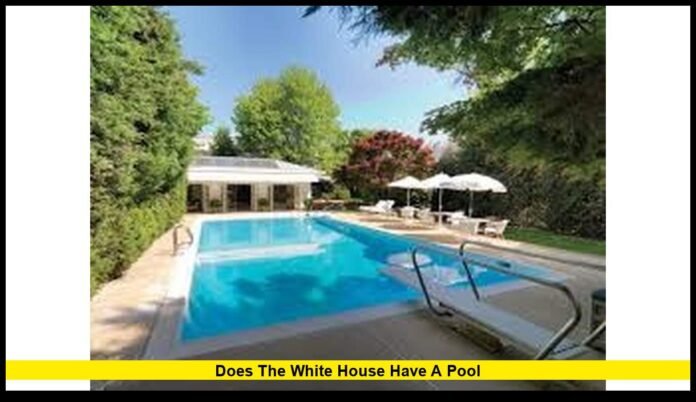

Many Americans have asked the question: does the White House have a pool? Yes, it does — and its pools tell a fascinating story about presidential history, personal health, and the private life behind one of the most recognized buildings in the world. The White House is not only a workplace for the President of the United States; it is also a home. Within those walls and on the surrounding grounds, presidents and their families live daily lives, relax, exercise, and spend time together. The pool has played an important role in that personal side of the presidency.
The White House pool is not just a recreational feature. It symbolizes how the most powerful office in America still belongs to a human being who needs space to unwind, heal, and stay physically strong. Over time, the White House has had two different pools: one indoor and one outdoor. Each has a unique history and purpose.
The Purpose Behind the First White House Pool
The first pool was installed during the presidency of Franklin D. Roosevelt in the early 1930s. Roosevelt, who contracted polio in 1921, relied on swimming as part of his therapy. Swimming allowed him to exercise his upper body without putting weight on his legs. Before the construction of this pool, Roosevelt had to travel to public pools or private locations, which needed additional security and privacy arrangements. It was impractical and often challenging.
To make it easier for the President to get the therapy he needed, supporters raised private funds to build an indoor swimming pool at the White House. It was located in the West Wing, between the Executive Residence and the Oval Office area. The pool, designed in a simple rectangular shape, allowed Roosevelt to enjoy relief from pain and maintain strength in his arms and torso.
This indoor pool became a well-known feature of Roosevelt’s presidency. Photographs of Roosevelt swimming there circulated widely, showing a more human and personal side of a leader navigating extraordinary national challenges — including the Great Depression and World War II.
How the Indoor Pool Changed Over Time
For years after Roosevelt, the indoor pool remained available for presidential families. However, by the late 1960s, the needs of the White House began to shift. The growth of media meant that there was increasing demand for space where news briefings could be held.
When Richard Nixon took office, he recognized the need for a permanent briefing room. Rather than demolish the old pool, the decision was made to cover it. A strong floor was built directly over the top, leaving the original pool structure underneath. The space became what we know today as the James S. Brady Press Briefing Room, where journalists gather daily to receive official updates from the White House.
The pool itself still exists below the floor — unused, but intact. There have been occasional discussions and curiosity about whether it could ever be restored. While there are no official plans to reopen it, its presence beneath the press room is a reminder of how presidential needs have evolved over generations.
The Outdoor Pool: A New Era of Recreation
The second and current pool is an outdoor swimming pool, and it was built during the presidency of Gerald R. Ford in 1975. Ford was known for his athletic lifestyle. He enjoyed golfing, skiing, and swimming, and he believed strongly in staying physically active. Because the indoor pool was no longer accessible for swimming, Ford wanted a space where he and his family could enjoy the water.
Like the indoor pool before it, the outdoor pool was funded through private donations, not taxpayer dollars. Supporters contributed to its construction, ensuring that the addition did not require public funding. The new pool was placed on the South Grounds of the White House, a large open lawn area behind the West Wing, offering privacy and security.
The pool measured approximately 22 feet wide and 54 feet long. It ranged from around three feet deep on the shallow end to nine feet deep on the deep end. It also included a poolside cabana, designed with changing rooms, showers, and a restroom — allowing family and guests to use the pool comfortably without walking through the main residence.
How Presidents and Their Families Have Used the Outdoor Pool
Since its construction, the outdoor pool has been a favorite feature among several presidential families.
- Gerald Ford frequently swam laps to stay in shape. He often enjoyed spending time there with his wife and children.
- Ronald and Nancy Reagan spent relaxing summer afternoons by the pool, and it became a peaceful retreat from the demands of office.
- George H. W. Bush was also physically active and made regular use of the pool for exercise.
- Barack Obama’s children, Malia and Sasha, were known to enjoy swimming during warm weather, giving the family a space to relax away from public attention.
The pool has allowed presidents to maintain fitness and spend quality family time, even while surrounded by constant responsibility.
The Location and Privacy of the Current Pool
The pool’s location on the South Lawn provides natural privacy. It is shielded by the architecture of the White House, trees, hedges, and security measures. The pool is not visible on public tours and is considered part of the private residence area.
Security and privacy are always the top priorities. The pool can be used only by the President, the First Family, and approved guests. Maintenance is handled with care to ensure that the pool area remains secure, functional, and comfortable.
Does the White House Have a Pool Today?
Yes. The outdoor pool is still in use today, and it continues to be maintained as part of the White House grounds. It remains a place where presidents and their families can relax, swim, and spend time together.
Meanwhile, the indoor pool remains beneath the press briefing room — not in use, but preserved as a historical structure.
So when the question comes up again — does the White House have a pool? — the answer remains a clear yes, and its presence offers a rare glimpse into the personal side of life in the President’s home.
Why the Pool Matters
The White House may be the center of national leadership, but it is also a place where families live. The pool represents something deeply personal — a reminder that even the President needs time to rest, reflect, and reconnect with loved ones.
It connects history, health, family tradition, and the subtle balance between public duty and private life.
What are your thoughts on this unique part of the White House? Feel free to share your perspective or continue exploring more insights into American history and leadership.