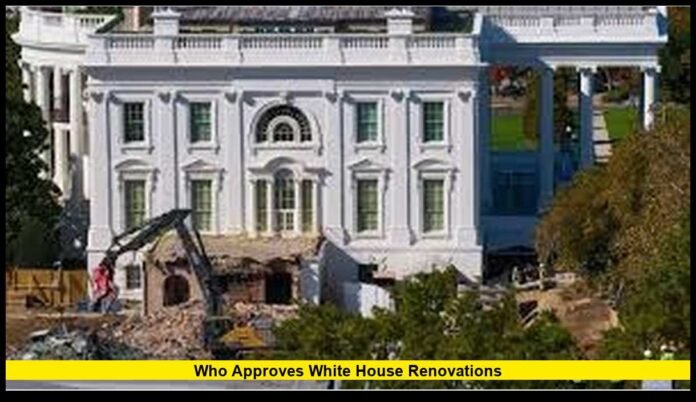

When questions arise about who approves White House renovations, the process turns out to be far less straightforward than most people imagine. As of late October 2025, a major expansion and modernization project is underway at the White House—specifically an estimated 90,000 square-foot addition including a new ballroom linked to the East Wing. That development shines a spotlight on exactly which bodies hold approval power — or don’t — and how the process works in practice.
The Layers of Approval for White House Renovations
Renovations at the White House involve multiple oversight layers: federal planning bodies, historic-preservation committees, interior-residence review, and executive sign-off. Here’s a breakdown of the main players:
Federal planning and design review agencies
- The National Capital Planning Commission (NCPC) reviews major federal construction and alterations in the Washington D.C. region, including changes to properties such as the White House.
- The Commission of Fine Arts (CFA) reviews design and aesthetics for federal properties in D.C., including the grounds of the White House.
- The Committee for the Preservation of the White House (CPWH) oversees historic-preservation and interior design matters inside the residence and state rooms.
Executive and operational leadership
- The President and the Executive Office of the President hold ultimate authority over the White House as the President’s residence and workplace.
- The White House Historical Association and the Office of the White House Curator contribute to preservation and furnishings, especially on the interior side.
Key takeaway: Approval for White House renovations isn’t handled by a single individual or body; rather, it emerges from a network of advisory and regulatory entities culminating in executive approval.
Read Also-Obama White House Renovation Cost
What’s Unique About the 2025 Project?
The current East Wing expansion underscores why people are asking “who approves White House renovations” more sharply than ever. Key factors:
- The project includes a privately-funded addition of about 90,000 sq ft to the East Wing of the White House, with a ballroom capable of hosting hundreds of guests.
- Demolition and site-preparation work began even as formal design submissions to NCPC remain incomplete, according to oversight officials.
- The White House contends that demolition occurs outside the traditional review trigger for NCPC—and that full design review will follow.
These factors raise practical questions about sequence of approvals, the scope of agency jurisdiction, and the transparency of the process. For example: If demolition is underway before design approval is formally submitted to the NCPC, who effectively approved the initial work?
Approval Process Step-by-Step
To answer the broader question “who approves White House renovations,” it helps to map the typical process—while noting deviations in the current case.
- Concept and initial planning: An executive agency or the White House staff identifies a renovation need—such as increased event space, updated infrastructure, or accessibility improvements.
- Preliminary review: Agencies like the NCPC and CFA receive early design concepts (e.g., 10-30% drawings) and provide input on site, design, historic context.
- Historic-preservation consultation: The CPWH reviews changes that affect the residence interiors, state rooms, decor, and heritage.
- Design submission and formal review: The NCPC reviews full design, environmental or site impact where required, and issues approval or recommended modifications. The CFA similarly weighs in on aesthetics.
- Funding and executive authorization: Because the White House is the President’s residence, the President and EOP approve final plans and funding (public or private).
- Construction and monitoring: Once approved, renovation proceeds, with oversight agencies retaining monitoring roles and periodic reviews.
In the current case, demolition appears to have started prior to full design submission to NCPC, prompting oversight concerns about who approved the initial phase of work.
Why Oversight Matters
Understanding who approves White House renovations matters for several reasons:
- Historic preservation: The White House is not just a residence—it’s a National Historic Landmark and a symbol of the nation. Major renovations risk altering historic character.
- Accountability: Public buildings, especially those of such prominence, should undergo transparent review. Oversight ensures that changes serve the public interest and meet design, safety, and preservation standards.
- Precedent: How approvals are handled sets a precedent for future administrations and federal properties—especially when private funds are used.
- Balance of power: With the executive branch overseeing its own residence, effective external review helps maintain checks and balances.
When demolition and construction proceed without full formal review, questions about when and how approvals occurred become critical to public trust.
Where the Oversight Gaps Are in 2025
In light of the current East Wing project, several concerns about the approval chain have emerged:
- Timing of demolition versus formal review: Although major structural changes began, the NCPC had not yet completed full design review. Some oversight officials argue demolition should not begin before agency review.
- Role of private funding: Because the project is privately funded, some typical appropriations and public‐fund oversight provisions don’t apply—raising questions about transparency and who is ultimately accountable.
- Advisory vs. binding authority: Agencies like the CFA have review power but lack binding approval authority for some changes. The President retains dominance, meaning oversight may be more consultative than regulatory.
- Public input and documentation: Design documents and project contracts have not yet been widely disclosed in public databases, according to architecture and preservation groups.
- Jurisdiction definitions: The White House contends that certain site work (like demolition) doesn’t trigger formal review under the National Capital Planning Act, but former officials say the statute has been interpreted more broadly historically.
These gaps highlight the practical importance of understanding who approves White House renovations, not just in theory, but how the process unfolds.
What Key Agencies and Committees Actually Do
To clarify responsibilities:
- National Capital Planning Commission (NCPC): Reviews federal construction projects within the Washington region. Approves site, design, environmental documentation.
- Commission of Fine Arts (CFA): Reviews aesthetics and design of significant federal structures in D.C., including White House grounds—but mostly advisory.
- Committee for the Preservation of the White House (CPWH): Oversees historic interior spaces and furnishings. Ensures state rooms retain historic integrity.
- Executive Office of the President (EOP): The White House’s operational and administrative hub. Ultimately authorizes changes to the residence.
- White House Historical Association & Curator’s Office: Assist with furnishings, interior design, conservation, but not structural approval per se.
When you ask “who approves White House renovations,” these agencies work together—but only the executive may give the final go-ahead.
Historical Context to Approval Authority
The oversight frameworks aren’t new:
- In the 1948–52 rebuild under President Harry S. Truman, Congress created the Commission on the Renovation of the Executive Mansion to oversee the work, with major design approval by the CFA.
- Over time, the White House has been exempted from certain historic-preservation laws (like Section 106 of the National Historic Preservation Act) but remains subject to the National Capital Planning Act.
- Advisory bodies such as the CFA and CPWH have historically played large roles in preserving architectural integrity—even when funds and authority rested with the executive.
That heritage shows that the question “who approves White House renovations” has always involved shared responsibility, though not always equal power.
What Happens Next — Why It Matters for Oversight
Looking ahead, this project may influence how future renovations are approved and how transparent the process must be. Possible implications include:
- New guidelines for private-funded expansions on federal landmark properties.
- Legislative proposals to strengthen binding review authority for oversight committees.
- Public demands for better disclosure of documents, donor funding, and design contracts.
- Renewed focus on the chronology of approval—from demolition to final design—to ensure no stage bypasses review.
For anyone tracking federal building governance, the 2025 renovation raises fundamental questions: When demolition starts without full review, has the approval process been properly triggered? Who truly has the power to stop or alter work on the “people’s house”?
In summary, when you ask who approves White House renovations, the answer is: a layered system involving the National Capital Planning Commission, the Commission of Fine Arts, the Committee for the Preservation of the White House, and finally the President and the Executive Office of the President. The major East Wing ballroom project underway in 2025 puts that system under a microscope—highlighting the importance of timing, transparency and public oversight when the home of the President undergoes major change.
Thank you for reading — feel free to comment on your views about preservation and power when it comes to the nation’s most iconic residence!