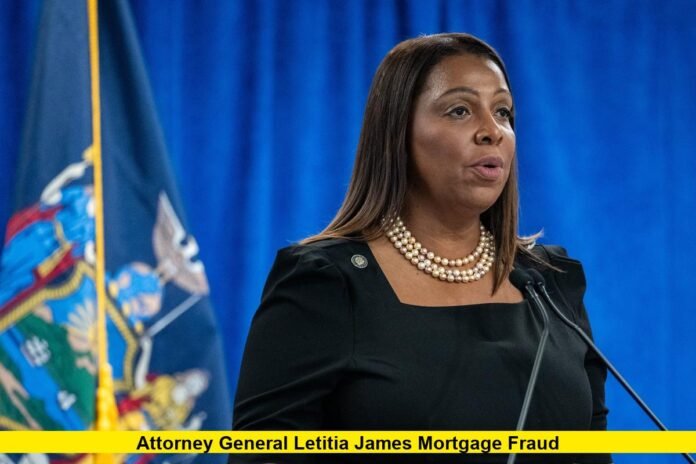

The name Attorney General Letitia James has been synonymous with bold investigations and high-profile cases. But now, the New York Attorney General herself faces a legal storm — one that has quickly become one of the most controversial cases of 2025. The phrase “Attorney General Letitia James mortgage fraud” has dominated headlines, sparking debates about politics, justice, and the independence of law enforcement in America.
This in-depth look breaks down everything you need to know about the case — from the background of the allegations to the potential implications for James, her office, and the political landscape at large.
Background: How the Mortgage Fraud Allegations Emerged
In early October 2025, federal prosecutors announced an indictment against New York Attorney General Letitia James, charging her with two counts related to mortgage fraud — one count of bank fraud and another for making false statements to a financial institution.
According to the charges, the alleged misconduct took place in connection with a 2020 mortgage application for a Virginia property. Prosecutors claim that James misrepresented the home’s purpose — labeling it as a “primary residence” to qualify for a lower interest rate and favorable loan conditions — while it was allegedly intended as an investment property.
The indictment alleges that these misstatements violated federal banking laws, though James’s legal team has strongly denied any wrongdoing.
A Shocking Turn for a Powerful Attorney General
Letitia James has built her career as one of the most formidable attorneys general in the country. She is best known for her civil and criminal actions against corporate giants, as well as her landmark lawsuits involving former President Donald Trump and his business empire.
Her rise to prominence as a reform-driven prosecutor made her both respected and polarizing. That’s why this case — which targets a sitting state attorney general — has sent shockwaves through the political and legal community.
Observers note that this is the first time in decades that a state attorney general has faced federal criminal charges while still in office.
Inside the Allegations: What Prosecutors Claim
The government’s case centers on alleged misstatements in a loan application submitted to a Virginia bank. The prosecution claims that James:
- Declared the property as her primary residence despite maintaining her permanent home in New York;
- Used that declaration to obtain a lower interest rate and reduced mortgage insurance;
- And, in doing so, violated federal banking laws designed to prevent mortgage-related fraud.
While the alleged financial benefit appears modest — reportedly less than $1,000 annually — prosecutors argue that the intent to deceive a financial institution is itself a criminal act, regardless of the amount of gain.
James’s defense counters that federal residency definitions are vague and that she had legitimate personal use of the property, which would qualify it as a residence under the rules in place at the time.
The Defense Responds: “A Political Prosecution”
Letitia James’s legal team has taken an aggressive stance, framing the charges as politically motivated retaliation for her past actions against powerful figures.
Her attorneys argue that:
- The Department of Justice investigation was influenced by political pressure from Washington;
- Several career prosecutors resigned or objected to the indictment, citing insufficient evidence; and
- The case undermines the principle of impartial justice by targeting a public official for political reasons.
James herself issued a public statement asserting her innocence, saying she “acted with full transparency and compliance” and vowing to fight the charges “with the same determination and integrity” that defined her career.
Legal Experts Weigh In
The legal community remains divided on the strength of the case. Some former prosecutors view the charges as unusual and weak, pointing to the small financial benefit and the ambiguity surrounding “primary residence” classifications in mortgage law.
Others contend that any false statement made to a bank, even a minor one, violates federal statutes — especially when the defendant holds public office.
However, what many agree on is that the case raises critical questions about prosecutorial discretion and political influence over criminal proceedings.
A Political Storm: Fallout in New York and Washington
The indictment’s impact reaches far beyond the courtroom. In New York, the announcement has triggered calls for resignation from political opponents and strong support from Democratic allies, who argue that the charges are part of a broader campaign to discredit one of the nation’s most outspoken public officials.
Meanwhile, in Washington, congressional members from both parties have weighed in. Some have called for an independent review of the DOJ’s decision-making process, citing concerns about the timing and motivation behind the prosecution.
For Letitia James, the political stakes are enormous. Her future — and possibly her career in public service — now hinges on how this case unfolds.
Inside the Justice Department: Conflicting Accounts
According to individuals familiar with the case, internal disagreements within the Justice Department played a major role in how the indictment emerged. Several career prosecutors reportedly expressed skepticism that the evidence met the threshold for criminal charges.
Those same prosecutors allegedly noted that the financial gain was negligible and that previous internal reviews had recommended closing the investigation without charges.
However, after key leadership changes at the U.S. Attorney’s Office, the case was revived — raising suspicions that political influence may have shaped the final decision.
This has led to renewed debate over the independence of federal prosecutors, with watchdog groups urging an investigation into whether external political pressure affected the process.
Upcoming Court Battles: What Happens Next
The next critical step is Letitia James’s arraignment and plea hearing, expected to take place in federal court in Virginia.
Her legal team is expected to:
- Enter a “not guilty” plea;
- File motions to dismiss the indictment on grounds of selective prosecution and political interference;
- Seek to disqualify certain DOJ officials involved in the case; and
- Demand full disclosure of internal communications related to the investigation.
Legal analysts predict a lengthy pretrial process, during which both sides will battle over evidence, prosecutorial motives, and definitions of key terms like “primary residence” and “intent to defraud.”
If convicted, James could face several years in federal prison and be disqualified from holding public office — though her attorneys have expressed confidence that the case will collapse long before reaching trial.
Public Reaction: Divided and Intensely Emotional
Public opinion has fractured along partisan lines.
Supporters of Letitia James argue that she is being punished for her fearlessness in holding the powerful accountable — especially in her high-profile civil cases involving corporate malfeasance and political corruption.
Critics, on the other hand, claim the case exposes hypocrisy within the justice system, asserting that James is now facing the same legal scrutiny she has often imposed on others.
Social media platforms have become battlegrounds for these competing narratives, with hashtags like #JusticeForJames and #AccountabilityForAll trending in the days following the indictment.
Implications for the Justice System
The “Attorney General Letitia James mortgage fraud” case has evolved into a test of faith in America’s justice system. Beyond the legal specifics, it symbolizes a deeper struggle over the politicization of prosecution and the limits of accountability for public officials.
If James is ultimately vindicated, it could serve as a warning against weaponizing the legal system for political ends. But if she is convicted, it may reinforce the principle that no one is above the law, regardless of political stature.
Either way, the outcome will resonate far beyond the courtroom — shaping public trust in both the Department of Justice and the office of the New York Attorney General.
What Comes Next
In the coming weeks, expect a flurry of motions, hearings, and media scrutiny. Political analysts predict that this case could influence New York’s 2026 electoral landscape, as well as national debates over federal prosecutorial power.
Letitia James, known for her resilience, is unlikely to step aside quietly. Those close to her describe her as “ready for the fight of her career” — one that could define not only her legacy but also the boundaries of political justice in America.
As the “Attorney General Letitia James mortgage fraud” case continues to unfold, it stands as one of the most consequential legal battles in recent memory — a clash between power, politics, and the pursuit of justice. Stay tuned, and share your thoughts below — this story is far from over.