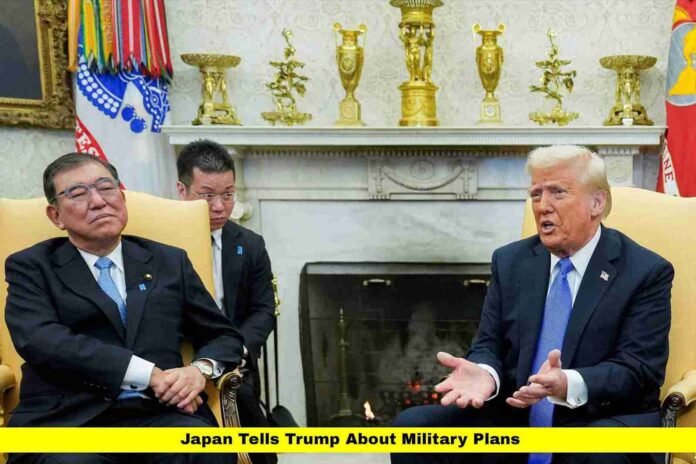

Japan tells Trump about military plans as President Donald Trump prepares for his visit to Tokyo from October 27–29, 2025. During this visit, Japanese leaders are expected to outline their latest defense initiatives, signaling a significant step in the U.S.-Japan security alliance. The discussions are focused on modernizing Japan’s Self-Defense Forces and enhancing cooperation in the face of regional security challenges.
Japan’s Strategic Military Modernization
Japan has announced a comprehensive plan to upgrade its military capabilities over the next five years. The program includes increasing defense spending to 2% of its GDP by 2027, acquiring long-range strike missiles, and enhancing technological capabilities, including cyber defense and drone countermeasures. These measures are intended to strengthen Japan’s deterrence capacity, allowing the country to respond more effectively to threats in the Indo-Pacific region. The government emphasizes that this modernization will help maintain peace while addressing evolving warfare dynamics and regional tensions.
Objectives Behind the Military Expansion
The primary goal of Japan’s military expansion is to ensure national security while supporting regional stability. By modernizing its Self-Defense Forces, Japan aims to deter potential adversaries and contribute actively to collective security with the United States. This initiative also seeks to enhance interoperability with U.S. forces stationed in the region, ensuring joint preparedness in case of conflicts. The strategic focus on defense, technological advancement, and readiness demonstrates Japan’s commitment to proactive measures in maintaining peace across the Indo-Pacific.
Implications for U.S.-Japan Relations
President Trump’s visit to Tokyo provides an opportunity to reinforce the U.S.-Japan alliance. Discussions are expected to cover military collaboration, burden-sharing, and joint responses to regional security concerns, including North Korea’s missile tests and China’s growing military assertiveness. Japan’s increased defense spending complements the U.S. presence in the region and reflects Tokyo’s willingness to take a larger role in security efforts. Strengthening this partnership ensures that both nations can act in a coordinated and effective manner in addressing threats to regional peace.
Challenges Facing Japan’s Military Plans
Japan’s military buildup is not without challenges. Domestically, there are debates over the impact of higher defense spending on the economy and concerns about Japan’s pacifist constitution, which limits the use of military force. Additionally, some citizens worry that a stronger military presence could strain domestic resources or provoke political controversy. Regionally, neighboring countries such as China and South Korea may view Japan’s military expansion as a shift away from its post-World War II pacifism, potentially affecting diplomatic relationships. Tokyo must balance modernization with careful diplomacy to ensure that these plans strengthen security without escalating tensions.
North Korea and China as Key Security Concerns
Japan’s military strategy is heavily influenced by the activities of North Korea and China. Frequent missile tests by North Korea have heightened concerns about regional stability, prompting Tokyo to enhance its missile defense systems and strengthen cooperation with the U.S. Navy and Air Force. At the same time, China’s expanding military capabilities in the East China Sea have made Japan increasingly focused on surveillance, intelligence, and rapid response measures. By presenting these plans to President Trump, Japan emphasizes the need for close coordination with the United States to address these evolving threats effectively.
Technology and Defense Innovations
A key part of Japan’s modernization involves technological innovation. Japan plans to integrate advanced missile defense systems, artificial intelligence for threat detection, and counter-drone technologies into its Self-Defense Forces. Cybersecurity measures are also a priority, aimed at protecting critical infrastructure from digital attacks. These investments reflect Japan’s focus on modern, adaptive defense capabilities that can respond to both conventional and unconventional threats. The presentation to President Trump highlights Tokyo’s commitment to maintaining a high-tech military that can work seamlessly with U.S. forces in joint operations.
Looking Ahead to U.S.-Japan Collaboration
President Trump’s visit is expected to solidify the partnership between the two nations, with discussions likely to focus on military coordination, joint training exercises, and long-term strategic alignment. By sharing its military plans, Japan demonstrates transparency and a willingness to coordinate defense efforts with the United States. This collaboration ensures a strong, united front in maintaining stability and security in the Indo-Pacific region. Both nations are expected to continue working together on defense initiatives that enhance readiness, deterrence, and regional peace.
Conclusion
Japan telling Trump about military plans marks a pivotal moment in the U.S.-Japan alliance. By outlining defense modernization, regional security strategies, and technological upgrades, Japan signals its commitment to peace and preparedness in a challenging geopolitical environment. President Trump’s visit provides an important platform to strengthen military cooperation, align strategic priorities, and address shared security concerns. As the two countries coordinate their efforts, the future of the Indo-Pacific region depends on continued collaboration, vigilance, and proactive defense measures.