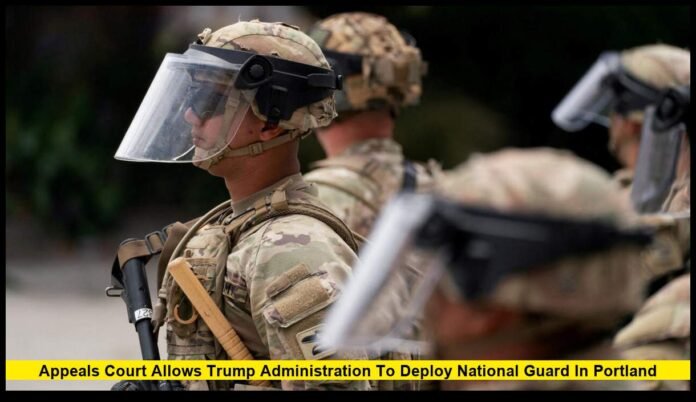

The appeals court allows Trump administration to deploy National Guard in Portland following a major ruling from the U.S. Court of Appeals for the Ninth Circuit. The decision, issued on October 20, 2025, lifted a key legal barrier that had blocked the Trump administration from deploying federalized National Guard troops to Portland, Oregon. The ruling represents one of the most significant judicial moments in the ongoing debate over federal authority and state sovereignty.
Background of the Case
The conflict began in late September 2025, when the Trump administration ordered the federalization of about 200 members of the Oregon National Guard. The move was framed as a response to ongoing unrest surrounding federal facilities in Portland. The administration cited federal law that permits the President to activate National Guard units when it is deemed necessary to enforce federal laws or protect federal property.
State and local officials in Oregon immediately challenged the decision. Governor Tina Kotek and Attorney General Dan Rayfield argued that the federalization order violated state sovereignty and overstepped the limits of presidential authority. The state filed suit in federal court, leading U.S. District Judge Karin J. Immergut to issue two temporary restraining orders in early October. These orders temporarily blocked the deployment of the National Guard while the court reviewed the matter.
The Trump administration quickly appealed the decision to the Ninth Circuit Court of Appeals, arguing that the President’s constitutional powers under federal law clearly allowed such action.
What the Ninth Circuit Decided
In a 2-1 decision, the appeals court ruled that the President acted within his lawful authority when federalizing the Oregon National Guard. The majority opinion emphasized that the President’s power to deploy Guard troops under U.S. law is broad, particularly when tied to protecting federal interests or maintaining public order.
The court found that Judge Immergut’s restraining order had improperly restricted executive authority. The panel noted that while judicial oversight is appropriate, courts must give “great deference” to presidential judgments in matters concerning national security and law enforcement.
Judge Susan P. Graber dissented, arguing that the decision undermines state autonomy and could set a precedent for future overreach. She warned that allowing federalization in such cases may weaken the balance between federal and state powers and blur the lines between military and civilian authority.
Implications of the Ruling
The Ninth Circuit’s decision means the Trump administration may proceed with steps toward deploying the National Guard in Portland. However, the troops have not yet been deployed because a second restraining order remains in place. Before any Guard units can take operational action, the administration must ask the district court to lift this remaining order.
This ruling significantly strengthens presidential authority over the National Guard during domestic incidents. It also clarifies that, under existing federal statutes, the President’s judgment about when to use such forces carries substantial legal weight, provided it aligns with statutory requirements and a legitimate federal purpose.
Reactions from Oregon Officials
Governor Kotek condemned the ruling, calling it “a dangerous step backward for state rights.” She reaffirmed Oregon’s intention to challenge the decision, potentially seeking a rehearing by the full Ninth Circuit or even the U.S. Supreme Court. Attorney General Rayfield echoed this sentiment, asserting that the federal government should not use the military to manage local unrest.
Local officials in Portland have also voiced concerns that the deployment could escalate tensions instead of calming them. City leaders insist that law enforcement operations within Portland’s jurisdiction should remain under local and state control.
Response from the Trump Administration
The Trump administration welcomed the court’s decision, calling it a victory for law and order. Officials stated that the federal government has both the right and the responsibility to act when states fail to protect federal property or enforce the law. The administration argued that recent unrest in Portland had disrupted federal operations and endangered personnel, justifying the deployment.
Supporters of the ruling argue that it restores clarity to presidential powers that have often been contested. They also point out that federal law has long granted presidents the ability to use the National Guard to uphold federal laws when regular forces are insufficient.
Legal and Constitutional Significance
The appeals court ruling raises fundamental questions about the limits of presidential power and the balance between state and federal authority. The court reaffirmed that the President may federalize National Guard units when necessary to enforce federal law, but the decision also reignited debates about whether such powers can be abused in political contexts.
Legal experts note several key takeaways from the case:
- Presidential Authority: The President retains broad discretion under 10 U.S.C. § 12406 to activate National Guard troops to execute federal laws.
- Judicial Oversight: Courts may review such actions but must defer to the executive’s judgment unless it clearly violates constitutional limits.
- State Sovereignty: The decision intensifies the ongoing debate about whether states should retain veto power over the use of their National Guard forces for domestic deployments.
Next Steps and Possible Outcomes
The Oregon state government is expected to file a motion requesting that the full Ninth Circuit rehear the case. If the court declines, Oregon may appeal to the Supreme Court. Meanwhile, the Trump administration will likely move forward in seeking the removal of the second restraining order that continues to block actual deployment.
If deployment proceeds, Oregon could see National Guard units operating in Portland for the first time under direct federal command. The administration has stated that such forces would focus on protecting federal buildings and maintaining security near sensitive facilities.
This case could become a defining moment for federal-state relations in the modern era, potentially influencing how future presidents use the National Guard for domestic operations. It may also shape public discussions about the appropriate role of the military within U.S. borders.
Timeline of Key Events
| Date | Event |
|---|---|
| Sept 27, 2025 | The Trump administration orders 200 Oregon National Guard troops federalized for Portland. |
| Oct 4, 2025 | Judge Karin Immergut issues a temporary restraining order blocking deployment. |
| Oct 5, 2025 | A second restraining order halts any Guard deployment in Portland. |
| Oct 20, 2025 | Ninth Circuit issues a 2-1 ruling in favor of the Trump administration, allowing deployment authority. |
| Upcoming | Oregon plans to seek an en banc rehearing and may appeal to the Supreme Court. |
Broader Impact on Federal-State Relations
The Ninth Circuit’s ruling could have wide-ranging effects beyond Oregon. Other states currently facing federal intervention disputes may look to this case as precedent. It could influence how courts interpret the President’s emergency powers in the context of protests, civil unrest, and other domestic crises.
For civil-rights advocates, the ruling reignites fears about federal overreach and the erosion of state autonomy. For proponents of stronger executive power, it represents a necessary clarification that ensures the federal government can act decisively when national interests are at stake.
Either way, the decision adds another layer of complexity to America’s enduring debate over who holds ultimate authority in times of domestic disorder — the states or the federal government.
Looking Ahead
For now, Portland remains at the center of this national legal and political dispute. Whether or not the Trump administration will actually deploy the National Guard depends on further legal proceedings in the coming days. If the final injunction is lifted, federalized Guard units could begin limited operations focused on security around federal buildings.
The next phase will determine whether Oregon’s challenge reaches the Supreme Court — and how that court may define the limits of presidential power over state military forces in the future.
The appeals court’s decision allowing the Trump administration to deploy the National Guard in Portland has reshaped the legal landscape of federal authority and state rights. As both sides prepare for the next legal battle, Americans are watching closely to see how this pivotal case will define the boundaries of power in the years to come.
What do you think — is this a justified action or an overreach of presidential power? Share your thoughts below and stay updated as the story unfolds.