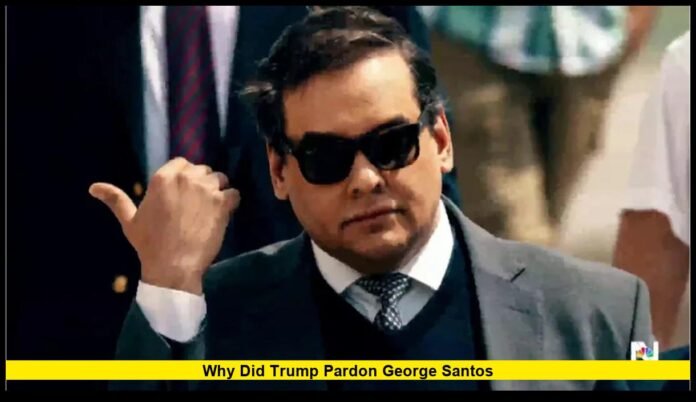

In one of the most controversial political developments of 2025, former President Donald Trump granted a full commutation to ex-Congressman George Santos. The announcement, made on October 17, 2025, sent shockwaves across the nation. Political analysts, legal experts, and the American public have since debated one burning question: why did Trump pardon George Santos?
The decision has become a defining moment in the intersection of politics, justice, and personal loyalty in the United States. To understand why this act drew such intense attention, it’s essential to examine Santos’s case, the motivations behind Trump’s choice, the legal and political implications, and how this event might shape the broader landscape of American governance.
The Background: George Santos’s Rise and Fall
George Santos’s story is as remarkable as it is polarizing. Once a rising figure in the Republican Party, Santos represented New York’s 3rd Congressional District, which covers parts of Long Island and Queens. When he first entered Congress in January 2023, he was celebrated by some for flipping a historically Democratic district. However, within months, his political career began to unravel.
Investigations revealed that Santos had fabricated large portions of his personal history—claiming degrees he never earned, jobs he never held, and even inventing stories about his family heritage. The revelations made him one of the most infamous political figures in modern American history.
In late 2023, after a damning ethics report, the House of Representatives voted overwhelmingly to expel Santos, making him one of the few members in U.S. history to be removed from office without a criminal conviction at that time. What followed was a series of legal troubles that ultimately led to his imprisonment.
The Criminal Case and Sentencing
By mid-2024, federal prosecutors had built a comprehensive case against Santos. He was charged with multiple counts of wire fraud, identity theft, and falsifying campaign finance documents. Prosecutors alleged that Santos used campaign donations for personal expenses—including luxury goods, cosmetic treatments, and credit card payments.
In August 2024, Santos pleaded guilty to several charges. At his sentencing in April 2025, a federal judge described his behavior as a “pattern of calculated deception” that “eroded public trust in democratic institutions.” He was sentenced to 87 months in federal prison (a little over seven years) and ordered to repay hundreds of thousands of dollars in restitution.
He began serving his sentence in July 2025 at a federal facility in New Jersey. But just three months later, Trump’s decision changed everything.
The Clemency Decision: Trump’s Announcement
On October 17, 2025, Donald Trump issued an official presidential commutation for George Santos, effectively ending his prison sentence and restoring many of his civil rights. Santos walked out of prison the same day.
Trump released a statement describing Santos as “a flawed man, but not a criminal deserving of such harsh punishment.” The former president emphasized that Santos had been “mistreated, over-sentenced, and politically targeted by a biased justice system.”
The statement went on to claim that the justice system had been “weaponized” against conservatives and that the case against Santos was an example of selective enforcement. Trump’s tone was both defiant and emotional, portraying Santos as a victim of an unfair political machine.
Why Did Trump Pardon George Santos?
To answer the question “why did Trump pardon George Santos”, it’s important to look at four key factors that shaped the decision: perceived injustice, loyalty politics, public optics, and Trump’s ongoing battle with federal institutions.
1. Perceived Injustice and Harsh Sentencing
Trump argued that Santos’s 87-month sentence was “far too severe” compared to penalties for other politicians convicted of similar crimes. His statement claimed that Santos had been treated more harshly because of his political affiliation and public association with Trump-era conservatism.
The narrative of over-punishment resonated with Trump’s political base, many of whom have long believed that Republican figures are treated more harshly in legal proceedings. This belief framed Santos’s punishment not as accountability for fraud, but as part of a broader campaign against conservative voices.
In Trump’s view, granting clemency was not just an act of mercy—it was an act of correction. He positioned it as a stand against what he called “a two-tiered system of justice.”
2. Loyalty and Political Symbolism
Loyalty has always been central to Trump’s political ethos. Those who support him publicly and defend his image often find themselves rewarded. In contrast, those who criticize or distance themselves are swiftly rebuked.
George Santos had been vocal about his admiration for Trump both before and during his legal troubles. In multiple interviews, Santos referred to Trump as his “inspiration” and “the reason I got into politics.” Even after his expulsion and conviction, Santos refrained from blaming Trump or his party, instead arguing that the system had turned against him.
Trump, in turn, praised Santos for his “courage to stand tall when others ran away.” The clemency decision appeared to be both a reward for loyalty and a message to Trump’s supporters: standing by him, even during adversity, pays off.
3. The Optics of Mercy
While Trump is often associated with combative politics, the Santos pardon allowed him to project an image of compassion and fairness. In his statement, he emphasized the themes of forgiveness and second chances.
This strategic framing appealed not just to political supporters but also to moderate voters who value fairness. By presenting the pardon as an act of mercy rather than political favoritism, Trump managed to re-enter the news cycle in a more sympathetic light ahead of key political developments in 2025.
Furthermore, the move reinforced Trump’s reputation among his base as someone unafraid to challenge institutional norms and deliver bold, decisive action.
4. A Broader Message to Federal Prosecutors
Perhaps the most significant underlying reason behind the decision lies in Trump’s ongoing tensions with the U.S. Department of Justice. For years, Trump has argued that federal prosecutors are politically motivated and biased against him and his allies.
By pardoning Santos, Trump sent a symbolic message that he would not allow “politically driven prosecutions” to define Republican politics. The clemency was, in a sense, a statement of defiance—a challenge to the legitimacy of the institutions investigating and prosecuting high-profile conservatives.
It also set a precedent. Future Republican politicians facing legal challenges might look to Santos’s case as evidence that Trump’s support can still hold significant sway, even outside the White House.
Public Reaction: Division and Debate
The public reaction to the pardon was immediate and deeply divided.
Supporters praised Trump’s decision as a correction of injustice. They argued that Santos, while guilty, had already faced immense public humiliation and deserved the opportunity to rebuild his life. Many on social media described the commutation as “a victory for fairness.”
Critics, however, denounced the move as blatant cronyism. They argued that Trump had used the pardon power to reward loyalty rather than uphold justice. Legal experts warned that the decision undermined the principles of equal accountability.
Several political commentators pointed out that Santos’s crimes—particularly misuse of campaign funds—struck at the heart of public trust. By reducing his sentence, critics say, Trump risked sending a message that political corruption can be overlooked if it aligns with partisan interests.
Inside the White House Strategy Circle
Those close to Trump’s inner circle reportedly viewed the Santos decision as a strategic political play. Advisors believed that standing up for a “politically persecuted” Republican figure could energize Trump’s base, reinforce his anti-establishment image, and strengthen loyalty among party members.
Trump’s team reportedly considered several high-profile clemency options but chose Santos because of the national attention surrounding his downfall. The decision allowed Trump to dominate the news cycle and frame himself once again as a champion for those “wronged by the system.”
Legal and Political Implications
Trump’s decision to pardon Santos raises complex questions about how executive clemency should be used. Traditionally, clemency is reserved for cases of clear judicial excess, evidence of rehabilitation, or humanitarian grounds.
In this case, critics argue the move blurs the line between justice and politics. It reinforces the idea that clemency can become a political weapon—a tool to reward allies and punish perceived enemies.
From a political perspective, the pardon may have also rekindled debate over Trump’s broader influence in American law and order. By directly intervening in a case involving a disgraced congressman, Trump reminded both supporters and opponents that his influence remains formidable.
Impact on George Santos’s Future
For Santos himself, the pardon represents both liberation and a complicated new chapter. While the commutation erased his remaining prison time, it does not automatically restore his reputation. He remains a deeply controversial figure, viewed by some as a symbol of political deception and by others as a victim of political persecution.
Following his release, Santos expressed gratitude to Trump, saying he “owed his freedom” to the former president. He hinted at plans to write a memoir and re-enter public life in some form, though it remains unclear whether he will pursue another political career.
Observers note that Santos’s return to the public eye could further polarize discourse, especially if he aligns closely with Trump’s political machinery heading into the next election cycle.
The Broader Political Message
Ultimately, why did Trump pardon George Santos? The decision appears to be about more than just one man’s legal troubles. It reflects a larger political message about loyalty, defiance, and the continuing struggle over how justice is applied in America.
Trump used the pardon to reinforce his identity as a disruptor—a leader willing to stand up to what he calls an “unfair establishment.” For his supporters, this move was yet another example of Trump’s refusal to bow to institutional pressure. For his critics, it was a warning of what unchecked power can look like in the hands of a populist figure.
Conclusion
The decision to pardon George Santos will remain one of the most debated acts of 2025. It touches every corner of American political life—from questions of justice and fairness to loyalty and influence.
Whether seen as an act of compassion or a maneuver of convenience, the move demonstrates Trump’s enduring ability to command attention and redefine political norms. The question of justice may linger, but one truth is clear: in modern American politics, few actions are as symbolic—or as divisive—as presidential clemency.
What do you think about Trump’s decision to pardon George Santos? Share your thoughts below and let your voice be part of the conversation.