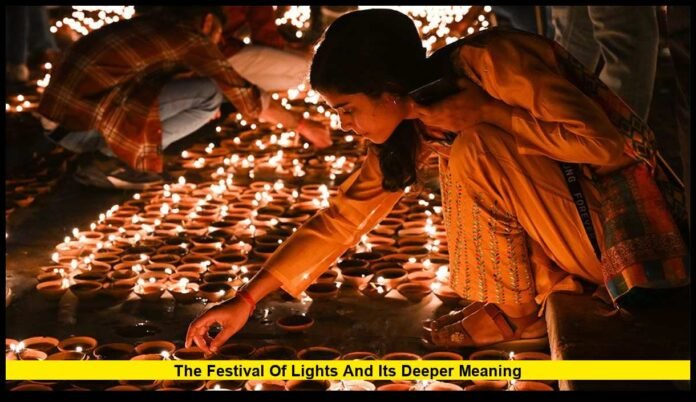

The question “what does Diwali celebrate” takes on growing significance each year as communities across the United States embrace one of the world’s most beautiful and meaningful festivals. Known widely as the “Festival of Lights,” Diwali (also spelled Deepavali) is celebrated by millions around the globe — including Hindus, Jains, Sikhs, and some Buddhists.
While traditions vary across regions and religions, the essence of Diwali remains universal: the triumph of light over darkness, knowledge over ignorance, and good over evil. It’s a celebration of hope, renewal, and shared joy that has found a vibrant home far beyond its origins.
A Festival That Illuminates the World
Diwali falls in either October or November, depending on the Hindu lunar calendar. In 2025, the main day of Diwali will be observed on October 20, with celebrations spanning several days before and after. Across India and in communities worldwide, homes glow with lamps, streets are decorated with rangoli designs, fireworks light up the sky, and families come together for rituals and feasts.
In the U.S., Diwali has grown rapidly in visibility. School districts are adding it to their calendars, city governments host public events, and major landmarks are illuminated in honor of the holiday. From New York to California, the Festival of Lights has become a cherished part of the nation’s cultural calendar.
But to truly understand its growing impact, it’s important to unpack what Diwali celebrates — and why it means so much to so many.
The Heart of Diwali: Light Over Darkness
At its core, Diwali celebrates the victory of light over darkness, both literally and symbolically. The lighting of lamps — called diyas — is the most recognizable Diwali tradition. Families place them in windows, courtyards, and doorways to symbolize the removal of spiritual darkness and the welcoming of positivity, prosperity, and peace.
This universal theme resonates across faiths and cultures. Whether interpreted spiritually, morally, or socially, the idea of light overcoming darkness offers a message of hope that transcends boundaries.
Hindu Tradition: The Return of Lord Rama
For most Hindus, the story of Lord Rama’s return to Ayodhya is central to Diwali. According to the Ramayana, one of Hinduism’s great epics, Rama returned home after a 14-year exile, during which he defeated the demon king Ravana.
The people of Ayodhya, overjoyed at his return, lit rows of oil lamps to celebrate his victory and guide him home. This act is commemorated each year through the lighting of diyas, creating breathtaking scenes in towns and cities across India and beyond.
The third day of Diwali — the festival’s most important day — is often dedicated to Lakshmi Puja, a prayer honoring Lakshmi, the goddess of wealth and prosperity. Families clean their homes, decorate entrances with rangoli, and offer prayers for health, success, and happiness in the coming year.
Sikh Tradition: A Day of Liberation
For Sikhs, Diwali coincides with Bandi Chhor Divas, or the “Day of Liberation.” This commemorates the release of Guru Hargobind Ji, the sixth Sikh Guru, from imprisonment in the early 17th century.
According to Sikh tradition, Guru Hargobind Ji refused to leave the fort until 52 other kings imprisoned with him were freed as well. His actions symbolize justice, leadership, and compassion. Sikhs mark the day with prayers, lighting displays, kirtan (devotional music), and langar — community meals served in gurdwaras.
Jain Observance: Spiritual Liberation
Jains celebrate Diwali as the day Lord Mahavira attained moksha, or spiritual liberation, in 527 BCE. For them, the festival is a solemn and reflective occasion, focused on introspection, fasting, and the pursuit of spiritual enlightenment.
Jain temples are illuminated with lamps to honor Mahavira’s teachings and to symbolize the light of knowledge spreading in the world after his liberation.
Buddhist Connections
Some Buddhists, particularly members of the Newar community in Nepal, also celebrate Diwali with their own unique customs. Their celebrations include lighting lamps, performing rituals, and honoring deities in ways that intertwine Buddhist beliefs with local traditions.
How Diwali is Celebrated Across the U.S.
As Indian and South Asian communities have grown in the U.S., so too have Diwali celebrations. Today, Diwali is celebrated in nearly every major American city, blending traditional customs with contemporary flair.
Typical celebrations include:
- 🪔 Lighting diyas and candles in homes, temples, and public spaces
- 🎨 Creating rangoli — intricate designs made with colored powders or flowers, usually placed at doorways to welcome guests
- 🎆 Fireworks displays, symbolizing joy and victory
- 🕉️ Religious prayers and rituals, including temple visits and home ceremonies
- 💃 Cultural performances, from classical dances to Bollywood showcases
- 🍬 Feasting on sweets like laddoos, barfi, jalebi, and gulab jamun, shared with neighbors and friends
Cities like New York, Chicago, Houston, and San Francisco now host large public Diwali festivals that attract people from diverse backgrounds. Diwali at Times Square in New York, for example, features performances, food stalls, and thousands of lamps illuminating the night.
Five Days of Celebration
While many associate Diwali with just one day, the festival traditionally spans five days, each with distinct rituals and meanings:
| Day | Name | Significance |
|---|---|---|
| Day 1 | Dhanteras | Marks the beginning of Diwali. People clean homes and buy gold or utensils, symbolizing good fortune. |
| Day 2 | Choti Diwali | A day of preparation, light decoration, and early celebrations. |
| Day 3 | Diwali | The main day of celebration with Lakshmi Puja, lighting diyas, family gatherings, and feasts. |
| Day 4 | Govardhan Puja | Celebrates gratitude to nature and Lord Krishna’s protection. |
| Day 5 | Bhai Dooj | Honors the bond between brothers and sisters, similar to Raksha Bandhan. |
This structure gives Diwali a rhythm that builds anticipation and deepens its significance over several days.
Modern Adaptations and Inclusivity
In the U.S., Diwali celebrations are evolving in exciting ways. Many families blend traditional customs with modern elements, such as:
- Hosting community potlucks alongside religious rituals
- Incorporating American fall décor into Diwali setups
- Using eco-friendly LED lamps in place of oil diyas
- Hosting workplace Diwali events to share the holiday with colleagues
As Diwali becomes more recognized nationally, schools and workplaces are increasingly acknowledging the holiday. Some schools give students time off, while others host cultural assemblies. Major companies also celebrate Diwali internally, recognizing its importance to their diverse workforce.
Why Diwali Resonates Beyond South Asia
The question “what does Diwali celebrate” is increasingly asked not just by those within the tradition, but by people across the U.S. who want to understand and participate in the festivities.
At its core, Diwali’s message — the victory of light over darkness — is universal. In a world that often feels divided, the festival offers a reminder of shared human values: hope, renewal, kindness, and togetherness. This is why more Americans, regardless of background, are lighting lamps and joining in the celebration each year.
The Economic and Social Impact in the U.S.
Diwali has also become an important economic and cultural event. Businesses see increased activity during this period as families shop for clothes, gifts, decorations, and sweets. Brands are launching Diwali-themed products, and tourism boards are organizing special events to attract visitors.
On a social level, Diwali celebrations foster cultural exchange. Non-South Asian neighbors often join local festivals, try traditional foods, and learn about the stories behind the rituals. This blending of traditions strengthens community ties and builds mutual respect.
Closing Thoughts
Understanding what Diwali celebrates means looking beyond the lamps and sweets to the heart of the festival. It’s about celebrating goodness, welcoming light, and cherishing community.
As Diwali continues to grow in prominence across the United States, it stands as both a cultural celebration and a universal message — that light, in all its forms, has the power to guide, heal, and unite.
Whether you’re celebrating with family traditions or discovering the festival for the first time, Diwali offers something meaningful to everyone.