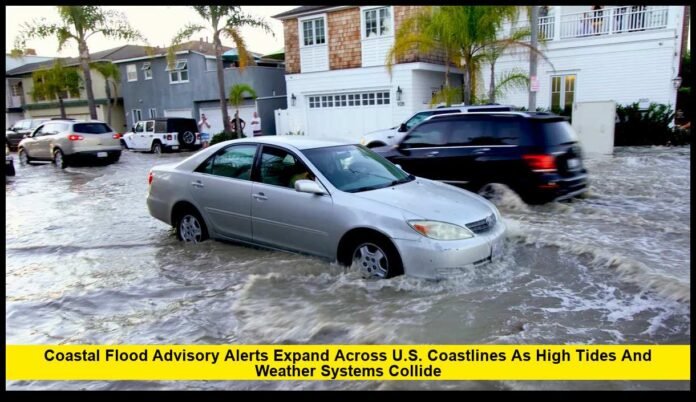

Coastal flood advisory alerts have been issued for several regions across the United States, warning communities about rising water levels, tidal flooding, and drainage backups. As seasonal king tides align with shifting weather systems, coastal neighborhoods on both the Atlantic and Pacific shores are seeing water inch closer to streets, homes, and businesses. These advisories are a clear reminder that even without a major storm, coastal flooding can happen quickly — and impact daily life.
Why Coastal Flood Advisories Are on the Rise
A coastal flood advisory is issued by the National Weather Service when minor flooding is expected in coastal or tidal areas. This often means water covering roads near shorelines, flooding in parks and parking lots, and pressure on drainage systems that causes water to bubble up through storm drains.
Unlike a coastal flood warning, which signals more dangerous and damaging conditions, an advisory is meant to alert communities to prepare and stay cautious. Over the last few years, the number of these advisories has been steadily increasing. Several natural and human-driven factors are behind this trend:
- King Tides: These are the highest tides of the year. When they occur, water levels rise well above normal, often spilling into streets and low-lying areas even without rain.
- Onshore Winds: Persistent winds blowing toward the coast can push water inland, adding to already elevated tide levels.
- Low Pressure Systems: Offshore weather systems lower atmospheric pressure, allowing water to rise and flood areas more easily.
- Rising Sea Levels: Gradual sea level rise is increasing baseline water levels, meaning tides that were once harmless now reach farther inland.
- Aging Infrastructure: Many coastal cities rely on drainage systems built decades ago. These systems were not designed to handle today’s frequent high-tide flooding.
When all these factors line up, even a clear day can bring standing water to coastal neighborhoods.
West Coast: High Tides Meet Persistent Winds
Along California’s coastline, coastal flood advisories are in effect as higher-than-usual tides combine with steady onshore winds. This mix is pushing saltwater onto low-lying roads, waterfront pathways, and parking lots. Some communities near bays and estuaries have already experienced minor flooding during peak high tide, leading to temporary street closures and detours.
While these events are usually short-lived, repeated flooding during seasonal king tides can wear down roads and flood protection structures. Local officials are encouraging drivers to check tide schedules before traveling through known flood-prone zones, especially during early morning and evening high tides.
Atlantic Coast: King Tides and Weather Systems Combine
On the East Coast, coastal flood advisories are in place from parts of the Mid-Atlantic down through the Carolinas. Here, king tides are coinciding with a slow-moving offshore weather system, creating conditions that push water inland through tidal creeks and drainage canals.
In cities like Charleston, streets in low-lying neighborhoods are already seeing water creep up from below, filling storm drains and pooling at intersections. Residents are used to “sunny day flooding,” but the alignment of high tides with atmospheric changes is intensifying the effect.
Barrier islands and coastal communities in the Mid-Atlantic are also on alert. Even moderate onshore winds can cause water to rise quickly along inlets and bays, sometimes cutting off access to smaller roads or bridge approaches during peak tides.
Gulf Coast: Watching for Rapid Changes
Although not under widespread advisories at the moment, sections of the northern Gulf Coast are being closely monitored. Weather shifts later in the week could lead to elevated water levels, especially if winds change direction and align with high tide cycles. Communities along the Gulf often see conditions change quickly, with advisories issued and lifted within short timeframes.
King Tides: The Natural Driver Behind the Advisory
King tides occur a few times a year when the gravitational pull of the moon and sun align in a way that amplifies tides. While predictable, their effects are becoming more noticeable as sea levels rise.
During king tides, water can rise several feet higher than the average daily high tide. In neighborhoods built just a few inches above normal tide levels, this can lead to flooding with no rain at all. Residents might wake up to find water covering their streets, driveways, or sidewalks, even under clear skies.
These tides are temporary, but when paired with wind or low-pressure weather systems, they can create challenging conditions that last for several days.
What a Coastal Flood Advisory Means for Communities
For coastal communities, these advisories are not just weather alerts — they affect daily routines. Roads that normally provide easy access to work, schools, or shopping can become temporarily impassable. Public transportation routes may shift, and waterfront businesses often deal with puddles or saltwater seeping into low entryways.
While the flooding associated with advisories is typically shallow and short-term, it can still cause damage to cars, landscaping, and infrastructure if residents don’t take precautions. Over time, repeated minor flooding can weaken roadbeds, wear away pavement, and lead to costly repairs for cities and homeowners alike.
Practical Safety Tips During a Coastal Flood Advisory
When a coastal flood advisory is in effect, a few simple actions can help keep people and property safe:
- Avoid driving through flooded streets. Even shallow water can be deeper than it looks, hide debris, or cause vehicles to stall.
- Move cars to higher ground. Parking in flood-prone areas can lead to avoidable damage.
- Secure loose outdoor items. Patio furniture, garbage bins, and small equipment can float away during tidal flooding.
- Check tide charts regularly. Knowing when the highest tides occur helps residents plan their day and avoid being caught off guard.
- Inspect drains and pumps. Keeping gutters, drains, and sump pumps clear can reduce the chance of water backing up into homes.
Long-Term Implications for Coastal Infrastructure
While each coastal flood advisory may seem minor on its own, their increasing frequency is having a real impact. Frequent tidal flooding contributes to faster road deterioration, repeated maintenance of drainage systems, and higher costs for homeowners and local governments.
Cities across the country are beginning to adapt. Some have installed tide gates that close during high tides to prevent backflow. Others have elevated roadways, added pump systems, or created temporary flood barriers to protect vulnerable areas. These solutions, however, require significant planning and investment, which can be challenging for smaller communities.
Advisories vs. Warnings: Knowing the Difference
It’s important to understand the distinction between a coastal flood advisory and a coastal flood warning:
- Advisory: Minor flooding is expected. Roads, parks, and low-lying areas may flood, but damage is typically limited.
- Warning: More severe flooding is happening or expected. Property damage and hazardous conditions are likely, and evacuations may be advised in some cases.
Being aware of this difference helps residents gauge how seriously to take each alert and prepare accordingly.
Looking Ahead
The latest coastal flood advisories are expected to remain in effect through the current high tide cycle. Conditions should ease once tides lower and offshore weather systems move away. However, with seasonal king tides expected to continue, similar advisories may return in the coming weeks.
As sea levels slowly rise and weather patterns shift, coastal communities will likely see these advisories become a regular part of life. The key to reducing their impact lies in awareness, preparation, and investment in resilient infrastructure.
Have you noticed flooding during recent coastal flood advisories in your community? Share your experiences and tips below to help keep others informed.