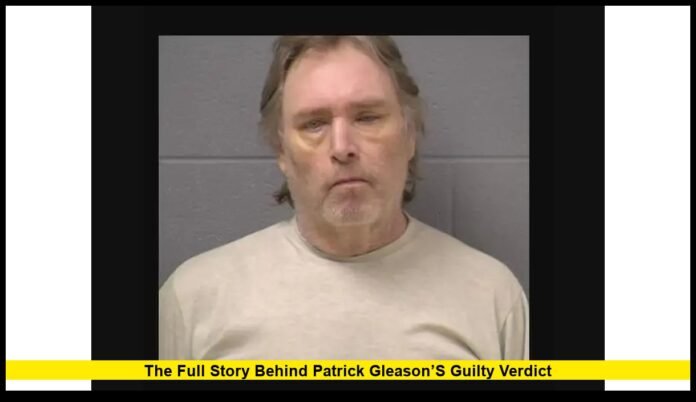

The story of the Crest Hill Illinois killer is one that has haunted the community for more than seven years. It involves a barroom dispute that turned deadly, a small Illinois community shaken by tragedy, and a legal process that stretched far longer than anyone expected.
Now, in October 2025, that chapter has finally reached a turning point. Patrick Gleason, a 63-year-old man from Crest Hill, has been found guilty of first-degree murder and multiple related charges for his role in the deadly shooting inside Izzy’s Bar in Joliet back in 2018.
This verdict marks the end of a long and painful wait for justice, bringing a sense of closure to victims’ families and the surrounding community.
The Night of the Crime: A Simple Dispute Turns Deadly
On March 9, 2018, Izzy’s Bar — a popular neighborhood spot in Joliet — was busy with its usual Friday night crowd. Bartender Daniel “Danny” Rios III, a well-known and loved figure in the local community, was behind the bar serving regulars.
Patrick Gleason, a resident of nearby Crest Hill, was among the customers that night. At one point, bar staff told him he couldn’t smoke inside. Witnesses later described how Gleason became angry during the exchange.
He left the bar, but what happened next would change lives forever. A short while later, he returned wearing a mask and carrying a gun. Without warning, he opened fire:
- Rios, 52, was shot and killed.
- A patron was targeted but managed to escape unharmed.
- The bar owner’s son was shot in the arm as he tried to intervene.
The entire attack lasted just moments, but its impact was immediate and devastating. The bartender’s death shook Joliet and neighboring Crest Hill, where many residents knew Rios personally.
Immediate Aftermath and Arrest
Witnesses quickly acted after the shooting. Some patrons tackled the masked gunman outside the bar, and police arrived soon after. Gleason was taken into custody and charged with first-degree murder, attempted murder, and aggravated battery with a firearm.
The case seemed straightforward. Surveillance cameras had captured the attack, multiple witnesses were willing to testify, and Gleason was apprehended shortly after the crime. But despite this, the road to trial would become unexpectedly long and complicated.
A Timeline Marked by Delays
The Crest Hill Illinois killer case didn’t move through the courts quickly. Instead, it was delayed again and again, stretching out over more than seven years.
2018 – Arrest and Charges
Gleason was arrested shortly after the shooting. Prosecutors filed multiple charges, including first-degree murder.
2019–2022 – Legal Motions and Procedural Delays
Defense attorneys filed numerous motions challenging evidence, particularly the surveillance footage and witness identifications. These motions slowed the pre-trial process. COVID-19 disruptions also impacted court schedules during this period.
2023–2024 – Further Delays
Disputes over jury instructions and evidence admissibility continued. The defense sought to weaken the prosecution’s case by questioning witness memories after such a long period.
2025 – The Trial Finally Begins
After years of waiting, the trial opened in Will County Court. Victims’ families and community members filled the courtroom, eager to see the case finally move forward.
For the Rios family, each delay meant another year without closure. For the community, it became a lingering reminder of a violent night that no one could forget.
Inside the Courtroom: What Led to the Conviction
The trial featured emotional testimony, detailed evidence, and strong arguments from both sides. But ultimately, it was the combination of surveillance video and eyewitness accounts that sealed the verdict.
Key elements of the trial included:
- Surveillance Footage: The video clearly showed a masked gunman entering Izzy’s Bar and firing at patrons. Prosecutors argued this was premeditated retaliation for the smoking dispute earlier that night.
- Witness Testimony: Multiple people inside the bar that night took the stand. They described Gleason’s earlier argument, his threats to “come back,” and their recognition of his body language and clothing despite the mask.
- Confrontation and Capture: Witnesses described how patrons helped subdue Gleason shortly after the attack, connecting him directly to the crime scene.
- Defense Strategy: Gleason’s attorneys questioned the reliability of witnesses after seven years, argued issues with evidence handling, and attempted to suggest alternate theories. However, the judge denied their requests for additional self-defense instructions to the jury.
Gleason did not testify in his own defense. His legal team focused on raising doubts but struggled to counter the clear sequence of events.
The Verdict: Guilty on All Major Counts
In October 2025, after several days of testimony and jury deliberations, Patrick Gleason was found guilty of:
- First-degree murder for the death of Daniel Rios
- Attempted murder for shooting at a bar patron
- Aggravated battery with a firearm for injuring the bar owner’s son
As the verdict was read, the courtroom grew silent. The Rios family embraced, some crying softly. Community members who had followed the case for years looked relieved. The words “guilty on all counts” brought a sense of long-awaited justice.
Sentencing to Come
Gleason faces a potential life sentence for the murder conviction, plus additional years for the other charges. Sentencing is scheduled for November 18, 2025, at Will County Court.
Prosecutors are expected to seek the maximum penalty, citing the calculated and violent nature of the attack. The defense has already indicated plans to file motions for a new trial and to appeal the verdict, arguing issues with evidence and jury instructions.
The Human Impact
The crime didn’t just claim one life — it shook an entire community. Rios wasn’t just a bartender. He was a friend, a familiar face, and someone who made people feel welcome.
His death left a void in Joliet’s local culture. Over the years, friends organized memorial events, keeping his memory alive even as the legal case dragged on.
For the bar’s patrons, returning to the scene after the shooting was emotionally difficult. Many described feeling uneasy, knowing how quickly a normal night turned tragic. For residents of Crest Hill, having one of their own at the center of such a crime created a complicated mix of emotions — anger, grief, and disbelief.
Why This Case Stands Out
The Crest Hill Illinois killer case is not just another local crime story. It stands out for several reasons:
- Local Identity: The shooter was from Crest Hill, and the crime happened in nearby Joliet, two closely connected communities.
- Public Violence: The shooting took place in a busy bar, a setting that’s typically associated with safety and socializing.
- Emotional Weight: Rios’ role as a beloved community figure gave the case deeper personal meaning for many residents.
- Legal Delays: The seven-year gap between the crime and the verdict kept the case in public conversation far longer than usual.
- Symbolic Verdict: The guilty verdict wasn’t just about one man — it was a statement of closure for two communities intertwined by tragedy.
Looking Ahead
The sentencing hearing in November will be the next key moment in this long legal journey. Victims’ families are expected to deliver emotional impact statements, describing how their lives were changed forever.
While Gleason’s legal team is preparing appeals, most legal observers expect the guilty verdict to stand, given the strength of the evidence. For the families and the community, the verdict represents a turning point — a chance to finally move forward.
A Community’s Long Road to Justice
The story of the Crest Hill Illinois killer is one of tragedy, perseverance, and resolution. A single night in 2018 altered countless lives, but after years of waiting, the community finally saw justice served in 2025.
Although nothing can bring Daniel Rios back, the guilty verdict ensures accountability for the man responsible and provides a measure of peace for those left behind.