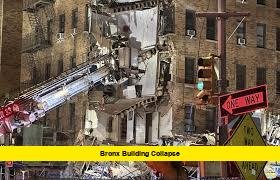

A Bronx building collapse stunned New Yorkers on Wednesday morning when part of a 20-story high-rise in the Mitchel Houses complex crumbled after a suspected gas explosion. The collapse, which happened just after 8 a.m. on Alexander Avenue in the Mott Haven section of the Bronx, left an entire corner of the public housing tower missing from ground to roof.
Though the sight was alarming and debris scattered across nearby streets, officials confirmed there were no injuries reported as of midday. The absence of casualties has been called a “miracle” by some residents, given the scale of the structural damage.
Timeline of the Bronx Building Collapse
The collapse began with what witnesses described as a sudden blast, followed by shaking walls and a thunderous crash. Residents in nearby buildings reported hearing a boom so loud that they believed it was an earthquake. Within moments, dust and smoke filled the block as alarms rang out across the complex.
- 8:10 a.m. – Residents hear an explosion and structural failure begins.
- 8:12 a.m. – Emergency calls flood dispatchers.
- 8:15 a.m. – Firefighters arrive on the scene.
- 8:30 a.m. – Streets around Alexander Avenue are sealed off.
- 9:00 a.m. – Building inspectors arrive to assess safety.
By 10 a.m., hundreds of onlookers had gathered at barricades, stunned by the gaping void in the high-rise tower.
What Caused the Collapse?
While the investigation is ongoing, officials believe the root cause was a gas explosion inside an incinerator shaft that runs vertically through the building. When the shaft walls gave way, the force compromised the entire corner of the structure, causing the section to peel away.
Incinerator shafts, once common in New York City high-rises, were used for garbage disposal in the mid-20th century. Over the years, many have been sealed due to safety risks. The Mitchel Houses, however, still contained active shafts.
This incident raises pressing questions:
- Were the shafts properly maintained?
- Were there previous reports of gas leaks?
- Did inspection records show warning signs that were missed?
Emergency Response and Safety Measures
The Fire Department of New York (FDNY) responded within minutes, sending more than a dozen units to the site. Firefighters conducted rapid evacuations, ensuring residents were moved away from compromised areas. Rescue teams also searched through the rubble for trapped individuals, though none were found.
Building inspectors declared the damaged corner structurally unsafe and began testing the remaining parts of the building for stability. Power and gas lines were cut off as a precaution. Residents in adjacent buildings were also temporarily evacuated until crews could confirm there was no ongoing threat.
Mayor Eric Adams, in an afternoon briefing, credited the speed of first responders with preventing injuries. He also acknowledged the serious concerns the collapse raises for public housing safety citywide.
Impact on Residents
For the hundreds of residents living in Mitchel Houses, the collapse was both terrifying and disruptive. Families described rushing down stairwells in pajamas, clutching children and pets, unsure whether the entire building would fall.
Temporary shelters were set up in nearby schools and community centers. Food, water, and basic supplies were distributed by city agencies and nonprofit partners.
For those whose apartments were directly affected, the future is uncertain. The exposed units are uninhabitable, and even residents in unaffected sections may face relocation if structural assessments show wider risks.
One mother described the panic of searching for her elderly father in the smoke. Another resident expressed frustration that her repeated complaints about gas smells in the building had gone unaddressed.
Community Reactions
The collapse struck a nerve in the Bronx community, where many residents feel long ignored by city leaders when it comes to housing safety. Public housing tenants across the borough have dealt with recurring issues ranging from mold and broken elevators to gas leaks and boiler failures.
Community advocates quickly called for a full review of New York City Housing Authority (NYCHA) complexes, arguing that the collapse is not just an isolated accident but part of a larger systemic failure.
“Residents should not have to fear their homes collapsing beneath them,” said one neighborhood organizer at the scene. “This is about accountability and basic human dignity.”
Infrastructure Concerns in Public Housing
The Bronx building collapse is not the first time aging public housing has been at the center of a crisis. Many NYCHA buildings were constructed between the 1940s and 1970s and rely on outdated systems that are prone to failure.
Key concerns include:
- Gas Lines: Many complexes rely on decades-old gas pipes, making leaks and explosions more likely.
- Incinerator Shafts: Rarely used in modern buildings, these vertical shafts present hidden fire and explosion risks.
- Structural Fatigue: Years of deferred maintenance leave load-bearing walls and support beams vulnerable.
- Inspection Gaps: Despite regulations, budget shortages often delay repairs or upgrades.
This collapse is expected to renew debates over funding for public housing renovations and whether more aggressive modernization is necessary to prevent future disasters.
Comparisons to Past Incidents
New York has witnessed several structural scares in recent years:
- 2023 Bronx Collapse: A corner of a seven-story apartment building crumbled, though fortunately no one was inside at the time.
- 2015 East Village Explosion: A gas leak caused a restaurant to explode, killing two people and collapsing nearby buildings.
- Harlem Gas Leak 2014: A leak led to a massive blast that killed eight residents and destroyed two buildings.
The difference today is that the collapse occurred in city-owned public housing. That fact alone intensifies scrutiny, since government agencies are directly responsible for maintaining safety standards.
Political and Legal Fallout
The coming weeks are likely to bring lawsuits, investigations, and heated debates at City Hall. Residents may pursue legal action against NYCHA if negligence is found. City council members are already demanding records of inspections at Mitchel Houses.
The state and federal government may also step in. Past crises in public housing have led to federal oversight or intervention, especially when systemic neglect was documented.
Next Steps in the Investigation
Officials outlined several priorities for the days ahead:
- Structural Analysis – Engineers will determine whether the rest of the building can be stabilized or must be partially demolished.
- Gas Leak Tracing – Utility companies will analyze gas lines and meters for evidence of leaks.
- Resident Relocation – Families whose homes are unsafe will be offered temporary and possibly long-term housing options.
- Policy Review – City leaders will review inspection procedures for incinerator shafts and gas systems across all public housing developments.
A Wake-Up Call for New York City
The Bronx building collapse is a reminder that New York’s housing infrastructure requires urgent attention. While the absence of casualties is a relief, the incident exposes vulnerabilities that could have had far worse outcomes.
With over 400,000 people living in NYCHA housing, the safety of these structures is not a local issue—it is a citywide priority. The collapse will likely become a turning point in discussions about housing policy, funding, and accountability.
Looking Ahead
For now, the focus remains on the families displaced and the investigation into what went wrong. But the larger story is about a city balancing growth with the challenges of aging infrastructure. The Bronx community, resilient as always, will demand answers—and likely reforms—in the weeks to come.
The Mitchel Houses will stand as a visual reminder of how fragile safety can be when oversight falters. New Yorkers citywide will be watching closely to see if the city takes meaningful action or allows the issue to fade once the rubble is cleared.
The Bronx building collapse has left residents shaken but determined to demand change. As the investigation unfolds, one thing is certain: this moment will fuel urgent conversations about the safety of public housing and the accountability of those charged with protecting New Yorkers.
What do you think this collapse means for the future of housing safety in New York City? Share your thoughts in the comments below and stay connected for further updates.