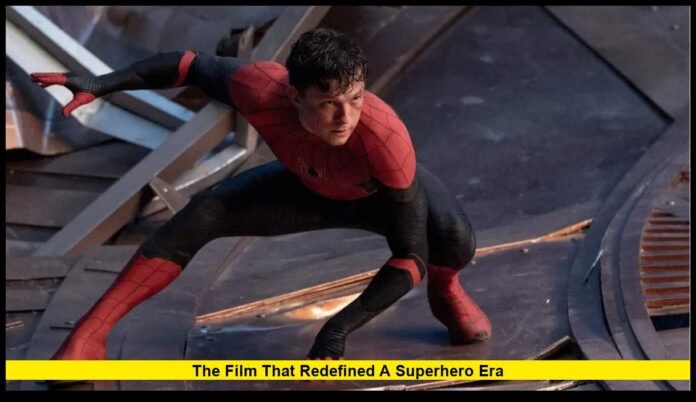

The release of Spider Man No Way Home in December 2021 remains one of the most groundbreaking events in superhero cinema. More than just another installment in Marvel’s Spider-Man trilogy, it became a cultural phenomenon that united generations of fans, brought back iconic characters, and set new standards for how superhero movies could tell stories.
Even years later, its impact is still being felt. Spider Man No Way Home continues to shape Marvel’s direction and remains a benchmark for box office success, emotional storytelling, and fan engagement.
A Multiverse of Spider-Men
The biggest draw of Spider Man No Way Home was the long-rumored, then joyfully confirmed, return of Tobey Maguire and Andrew Garfield as Spider-Man. Seeing three Spider-Men—Maguire, Garfield, and Tom Holland—together on screen was more than a nostalgic moment. It was the first time a major superhero film united multiple eras of storytelling into a single narrative.
Each actor brought something unique:
- Tobey Maguire returned as the wise, seasoned Spider-Man who had lived with his choices for decades.
- Andrew Garfield brought humor, heart, and redemption, finally finding closure after the loss of Gwen Stacy in The Amazing Spider-Man 2.
- Tom Holland carried the weight of being the youngest Spider-Man, forced to face unimaginable choices and heartbreak.
This combination created a dynamic that celebrated the past while pushing the story forward.
Villains Old and New
The multiverse concept allowed Marvel to reintroduce villains from earlier Spider-Man films. Audiences welcomed them back with open arms:
- Willem Dafoe’s Green Goblin became the standout villain, more terrifying and manipulative than ever. His battle with Holland’s Peter pushed the film to its emotional breaking point.
- Alfred Molina’s Doctor Octopus returned with his signature mechanical arms, bringing both menace and eventual redemption.
- Jamie Foxx’s Electro, Thomas Haden Church’s Sandman, and Rhys Ifans’ Lizard rounded out the rogues’ gallery, giving Spider Man No Way Home a scale no previous film had attempted.
By blending these characters into one story, the film honored its history while raising the stakes higher than ever.
Emotional Core of the Story
At its heart, Spider Man No Way Home wasn’t just about multiverse spectacles. It was about Peter Parker’s growth.
Tom Holland’s Peter faced his toughest challenge yet: balancing his identity as Spider-Man with the personal cost of his choices. The turning point came with the heartbreaking death of Aunt May, who delivered the famous words: “With great power, there must also come great responsibility.”
This moment marked the true birth of Holland’s Spider-Man as an independent hero, separate from the Avengers and Tony Stark’s mentorship. It was a raw, emotional reminder that Spider-Man stories have always been about sacrifice.
A Bold Ending
Spider Man No Way Home ended on one of the boldest notes in the MCU. Doctor Strange’s spell erased Peter Parker from the memory of everyone he loved, including MJ and Ned. Alone, with no allies, Peter stepped into his new role with a handmade suit, symbolizing his independence.
This ending gave the trilogy a sense of closure while opening the door for entirely new stories. It stripped Spider-Man down to his essence: a young hero struggling in New York, unknown to the world but still driven to protect it.
Box Office Records and Audience Impact
The financial success of Spider Man No Way Home was staggering. It became one of the highest-grossing films of all time, earning nearly $2 billion globally and over $800 million domestically.
But beyond numbers, the film achieved something few blockbusters manage—it became a cultural event. Fans packed theaters, cheered at reveals, and created viral reactions online. It wasn’t just a movie; it was an experience shared by millions.
Why Fans Still Celebrate Spider Man No Way Home
Even years after its release, Spider Man No Way Home continues to be a topic of discussion. Fans revisit it for many reasons:
- The reunion of the three Spider-Men created unforgettable chemistry and emotional dialogue.
- Green Goblin’s role as the ultimate villain remains a standout performance.
- The ending continues to spark theories about how Peter will rebuild his life in future films.
The film’s mix of nostalgia, action, and emotional storytelling ensures it stays fresh in the minds of audiences.
How It Reshaped the MCU
Spider Man No Way Home wasn’t just about Spider-Man. It redefined the Marvel Cinematic Universe. By fully embracing the multiverse, the film laid groundwork for later projects exploring alternate realities, crossovers, and new versions of familiar characters.
It also demonstrated the power of collaboration between studios. Sony and Marvel’s partnership proved that shared ownership of characters can produce massive creative and financial success.
Behind the Scenes: Making the Impossible Happen
The film’s achievements didn’t happen overnight. Bringing together three generations of Spider-Men and their villains required coordination, secrecy, and careful storytelling. Cast members had to keep their roles under wraps, despite fan theories and leaks.
The production also relied on blending practical effects with cutting-edge CGI to make battles, especially the Statue of Liberty finale, feel both grounded and epic.
Actors like Willem Dafoe insisted on doing many of their own stunts, ensuring authenticity. Meanwhile, the camaraderie between Holland, Maguire, and Garfield behind the scenes translated into genuine chemistry on screen.
Lasting Legacy
The legacy of Spider Man No Way Home goes beyond its success at the box office. It has become a template for how to handle nostalgia in film. Instead of simply reusing old characters for fan service, the film gave them purpose, closure, and new meaning.
It also proved that superhero films can balance spectacle with serious themes—loss, redemption, and identity—without losing their mass appeal.
Looking Ahead: The Future After No Way Home
The ending of Spider Man No Way Home set the stage for future stories. A fourth Spider-Man film with Tom Holland has already been confirmed, with promises of a more grounded narrative. Fans expect it to explore Peter’s struggles without his old support system.
Questions remain:
- Will MJ and Ned remember Peter?
- What villains will rise in the next chapter?
- How will Spider-Man reconnect with the larger MCU?
Whatever direction the story takes, it will build on the foundation created by Spider Man No Way Home.
Closing Thoughts
Spider Man No Way Home wasn’t just another blockbuster—it was a cultural moment that brought fans together across generations. With its mix of nostalgia, emotional depth, and record-breaking success, it redefined what a superhero film could be.
Its influence continues to ripple through the MCU and beyond, setting the stage for the future of Spider-Man and multiverse storytelling. Whether you were cheering in theaters during the Spider-Men’s reunion or reflecting on the film’s bittersweet ending, one thing is clear: Spider Man No Way Home will be remembered as one of the greatest superhero films ever made.
What was your favorite moment from Spider Man No Way Home? Share your thoughts and keep the conversation going about a film that captured hearts around the world.