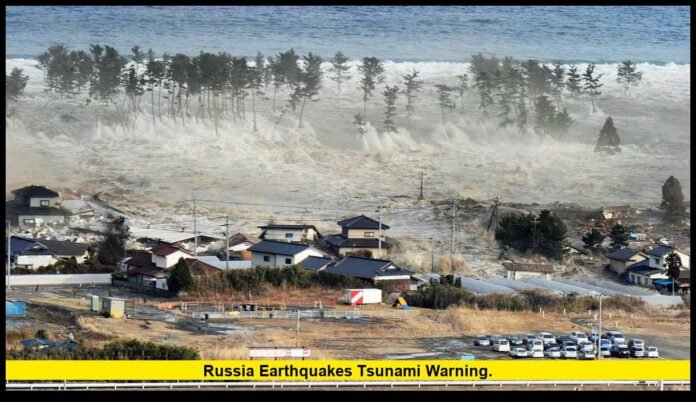

The phrase russia earthquakes tsunami warning once again dominates international news after a massive 7.8-magnitude earthquake shook the Kamchatka Peninsula in Russia’s Far East on September 18–19, 2025. The powerful tremor triggered tsunami alerts, waves along the coast, and widespread evacuations, leaving millions watching anxiously as emergency teams scrambled into action.
Although no devastating waves materialized, the incident highlights the region’s extreme vulnerability to seismic disasters and the importance of rapid response systems in protecting lives.
The Earthquake: Epicenter and Scale
The quake struck in the early hours of September 19 (local time), centered offshore, approximately 127–130 kilometers east of Petropavlovsk-Kamchatsky, the capital of Kamchatka.
- Magnitude: 7.8
- Depth: Approximately 19 kilometers
- Duration: Residents reported shaking that lasted nearly 40 seconds
- Classification: Considered a major shallow earthquake
People living in Kamchatka’s coastal towns described buildings swaying, windows rattling, and objects falling. Many rushed out of their homes into the cold night air as sirens warned of a possible tsunami.
Tsunami Warning Issued and Lifted
Immediately after the quake, Russian emergency authorities issued a tsunami warning across the eastern coastline.
- Initial fears: Waves up to three meters were forecast in the most vulnerable bays and inlets.
- Observed reality: The actual waves that reached the coast measured between 30 and 62 centimeters. While noticeable, they did not cause major flooding.
- Duration of alert: Advisories remained in place for several hours before being downgraded and later lifted.
In Alaska, particularly along the Aleutian Islands, a tsunami advisory was also issued as a precaution. By the afternoon, U.S. authorities confirmed there was no longer a threat.
Local Impact
The earthquake caused panic but relatively limited physical damage:
- Casualties: No confirmed deaths or serious injuries.
- Infrastructure: Minor cracks in buildings, broken glass, and power outages in Petropavlovsk-Kamchatsky and surrounding towns.
- Transportation: Some coastal roads were closed until inspections confirmed their safety.
- Schools and offices: Classes were suspended for the day while emergency teams assessed structures.
Shelters in higher ground areas were prepared in case evacuations became extended, but most residents were allowed to return home once the tsunami alert was canceled.
Aftershocks and Seismic Chain
The 7.8-magnitude earthquake was not an isolated event. It is widely considered an aftershock of the even larger 8.8-magnitude quake that struck Kamchatka in July 2025, one of the strongest recorded globally in recent years.
Since July, the region has experienced:
- Several strong tremors above magnitude 7.0
- Dozens of moderate quakes between 5.0 and 6.0
- Hundreds of smaller aftershocks felt locally
This chain of seismic events underscores the stress building along fault lines in the region, raising concerns that further large quakes could strike in the near future.
Why Kamchatka Is So Seismically Active
The Kamchatka Peninsula lies directly along the Pacific Ring of Fire, where the Pacific Plate subducts beneath the North American and Okhotsk plates. This tectonic activity makes it one of the most earthquake-prone areas on Earth.
Key points about Kamchatka’s seismic risk:
- It has produced some of the largest earthquakes in recorded history, including a magnitude 9.0 event in 1952 that triggered a destructive tsunami.
- Subduction zones here generate both earthquakes and volcanic eruptions; Kamchatka is also home to more than 160 volcanoes.
- The July 2025 quake shifted stress along fault lines, increasing the likelihood of continued aftershocks.
This explains why every tremor in Kamchatka is treated as a potential tsunami trigger.
The Science of Tsunami Warnings
The issuance of a russia earthquakes tsunami warning involves international cooperation. Seismic data from Russia’s emergency services, the U.S. Geological Survey, and the Pacific Tsunami Warning Center were quickly analyzed to predict wave activity.
How the process works:
- Detection: Seismographs instantly record the earthquake.
- Assessment: Agencies determine magnitude, depth, and epicenter.
- Prediction models: Computer simulations estimate possible tsunami wave heights and arrival times.
- Alerts issued: Warnings are broadcast to at-risk communities.
- Updates provided: If waves are smaller than expected, alerts are downgraded or lifted.
This rapid system can save lives by giving residents time to move inland or to higher ground.
Community Preparedness
In the latest event, local communities demonstrated resilience and preparedness. Kamchatka residents are accustomed to earthquake drills and tsunami awareness campaigns, which likely reduced panic and improved evacuation times.
Examples of preparedness measures taken:
- Coastal sirens activated within minutes of the quake
- Schools and government buildings evacuated quickly
- Families moved to pre-designated shelters on higher ground
- Emergency services patrolled coastal areas to keep people away from beaches
The smooth execution of these steps shows how prior training can reduce risks, even during powerful natural disasters.
International Monitoring
The quake also drew international attention:
- Alaska: The Aleutian Islands, directly across the Bering Sea from Kamchatka, briefly went on alert.
- Japan: Authorities monitored wave activity, though no alerts were needed.
- Hawaii and U.S. West Coast: Agencies confirmed no significant tsunami threat.
This global monitoring network demonstrates how interconnected the Pacific region is when it comes to seismic safety.
Comparing With Past Quakes
When looking at russia earthquakes tsunami warning events, it helps to compare with history:
- 1952 Kamchatka Earthquake: Magnitude 9.0, caused a devastating tsunami that reached as far as Hawaii and Chile.
- 2006 Kuril Islands Earthquake: Magnitude 8.3, triggered widespread tsunami warnings across the Pacific, though damage was limited.
- 2025 Sequence: The July 8.8 quake and September 7.8 aftershock have reminded residents of the region’s history and the constant need for vigilance.
The latest quake did not cause widespread destruction, but it fits a long pattern of high-risk events in this region.
Quick Reference Table
| Detail | Information |
|---|---|
| Date | September 18–19, 2025 |
| Magnitude | 7.8 |
| Epicenter | 127–130 km east of Petropavlovsk-Kamchatsky |
| Depth | 19 km |
| Tsunami Warning | Issued in Kamchatka, later lifted |
| Observed Wave Heights | 30–62 cm |
| Aftershocks | Up to magnitude 5.8 reported |
| Casualties | None confirmed |
| Damage | Minor infrastructure issues, temporary outages |
Looking Ahead
Seismologists caution that aftershocks will likely continue for weeks or even months. While smaller, they can still damage weakened structures or cause localized tsunamis in shallow waters.
Authorities in Kamchatka and surrounding regions remain on high alert. They emphasize:
- Staying prepared with emergency kits and evacuation plans.
- Avoiding coastal areas immediately after large tremors.
- Following official channels for updates.
For residents of the Pacific basin, this latest quake is another reminder that natural disaster readiness is essential.
Final Thoughts
The recent Russia earthquakes tsunami warning highlights both the dangers and the preparedness of life along the Pacific Ring of Fire. Although the waves were smaller than feared and damage was minimal, the event underscores the ongoing seismic risks in Kamchatka.
For people in coastal regions worldwide, it’s a powerful lesson: earthquakes can happen without warning, but communities that prepare and respond quickly stand the best chance of avoiding tragedy.
If you were following the news, what do you think—should more countries invest in stronger tsunami alert systems? Share your views and join the conversation.