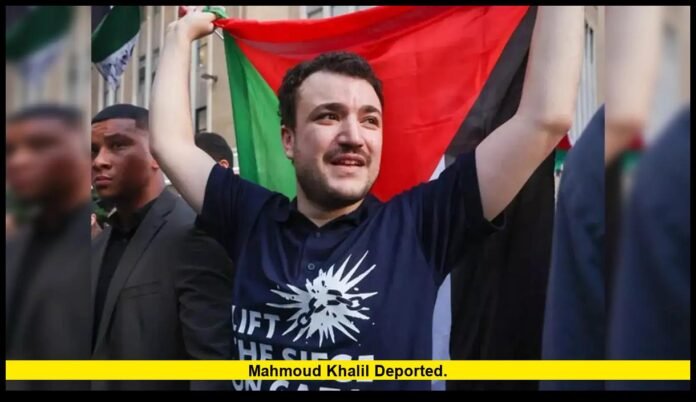

The decision by an immigration judge to order Mahmoud Khalil deported has become one of the most closely watched legal cases of 2025. It has sparked heated debates across the United States about free speech, immigration law, political activism, and civil rights. While the case is still moving through appeals, the ruling has already made waves, raising questions about what it means for immigrants who are also outspoken activists.
Who Is Mahmoud Khalil?
Mahmoud Khalil is a 30-year-old activist of Palestinian descent. He was born in a refugee camp in Syria, where his parents had fled decades earlier. Through his mother’s heritage, Khalil also obtained Algerian citizenship, giving him dual national identity.
He later moved to the United States to pursue higher education. At Columbia University, Khalil earned recognition as a graduate student and a central figure in pro-Palestinian demonstrations. During the spring of 2024, when student encampments spread across college campuses, he was one of the leading voices negotiating with administrators. His speeches and organizing drew national media attention, putting him at the center of a larger conversation about free expression on campuses.
Khalil’s activism made him a target of scrutiny. By early 2025, federal immigration authorities were reviewing his permanent residency status, eventually building the case that has now led to a deportation order.
Why Was Mahmoud Khalil Ordered Deported?
The immigration judge ruled that Khalil misrepresented material facts on his green card application. Specifically, authorities alleged that he failed to disclose certain affiliations and activities they considered relevant. The judge determined these omissions were deliberate, which under immigration law amounts to fraud or willful misrepresentation.
Because of this finding, Khalil was deemed removable from the United States. The court identified two possible destinations for deportation: Syria, where he was born, or Algeria, where he is a citizen.
His attorneys strongly dispute the government’s claims, arguing that the omissions were either minor or unrelated to his eligibility for permanent residency. They maintain that Khalil is being targeted because of his outspoken activism and political views.
Legal Context: How Immigration Law Applies
U.S. immigration law requires applicants for visas, green cards, or citizenship to disclose comprehensive information about their personal history, affiliations, and background. If the government determines that information was knowingly withheld, the applicant can be stripped of their status.
In Khalil’s case, the judge accepted the government’s argument that he intentionally misled authorities. That finding, whether upheld or overturned on appeal, will have long-term consequences for him and possibly for others in similar circumstances.
Khalil’s Time in Detention
The case began in March 2025, when Khalil was arrested by Immigration and Customs Enforcement in New York. He was transferred to a detention facility in Louisiana, where he spent more than three months.
During this time:
- He was separated from his wife and newborn son, both U.S. citizens.
- His detention was criticized by civil rights advocates as excessive, given that he had no violent criminal history.
- Supporters held protests demanding his release, framing his case as an attack on free speech.
In June 2025, a federal judge ruled that the government could not hold him indefinitely based on vague claims of national security. Khalil was released, but deportation proceedings continued.
September 2025: The Deportation Ruling
In mid-September 2025, Immigration Judge Jamee E. Comans ruled that Mahmoud Khalil deported for misrepresentation on his green card application. The decision stunned his supporters, who had hoped the case might be dismissed after months of public outcry.
The ruling does not mean Khalil will immediately be forced to leave the country. His legal team filed an appeal within days, and separate federal protections remain in place due to ongoing civil rights litigation. For now, Khalil remains in the U.S. with his family, but his future is deeply uncertain.
Public and Political Reaction
The decision has divided opinion nationwide.
Support for Khalil
- Civil rights groups argue the ruling is an attempt to punish him for exercising free speech.
- Student organizations at Columbia and other universities have staged demonstrations, framing his case as symbolic of broader government overreach.
- Activists emphasize the humanitarian impact of separating Khalil from his wife and child.
Criticism of Khalil
- Some government officials argue the ruling is a straightforward application of immigration law.
- Critics say the law must apply equally to all applicants, regardless of political views.
- They insist the case is not about activism but about dishonesty on official paperwork.
Timeline of Key Events
| Date | Event |
|---|---|
| Spring 2024 | Khalil emerges as a student leader during pro-Palestinian protests at Columbia University. |
| March 2025 | Arrested by ICE in New York; transferred to a Louisiana detention center. |
| June 2025 | Released from detention after a federal court rules indefinite detention unlawful. |
| Summer 2025 | Civil rights lawsuit filed challenging the legality of his treatment in custody. |
| September 2025 | Judge rules Mahmoud Khalil deported for misrepresentation on his green card application. Appeals filed immediately. |
Impact on His Family
Khalil’s wife and their infant son are U.S. citizens. Deportation would force the family into an impossible situation—either separating or leaving the country together. His attorneys have highlighted this as a key humanitarian issue, urging courts to weigh the devastating consequences.
For Khalil personally, deportation to Syria would be especially dangerous given ongoing conflict and instability. Algeria, while safer, is a country he has little personal connection to, despite his citizenship there.
Why This Case Matters Beyond Khalil
The ruling against Khalil raises larger questions about how the United States balances free expression with immigration enforcement.
- Precedent Setting: If upheld, the case could become a model for how omissions on applications are treated, especially when tied to political activity.
- Free Speech Concerns: Critics fear that outspoken immigrants may be vulnerable to similar scrutiny, leading to a chilling effect on activism.
- Civil Rights: The case is being closely watched as a test of constitutional protections for lawful permanent residents.
This is not just one man’s fight—it is a story with implications for thousands of immigrants navigating life in America.
What Happens Next?
Khalil’s lawyers have filed appeals, and the case is likely to move through higher immigration courts in the coming months. Possible outcomes include:
- Appeal Success: If a higher court rules the omissions were not material or intentional, Khalil could keep his green card.
- Appeal Failure: If the ruling stands, Khalil could be removed to Algeria or Syria, depending on diplomatic and humanitarian considerations.
- Extended Legal Fight: With the civil rights lawsuit still active, deportation may be delayed for months or even years.
Community Support and Demonstrations
Across major cities, rallies and protests have continued in support of Khalil. Demonstrators carry signs reading “Hands off Mahmoud” and “Free speech is not a crime.”
On college campuses, his case is often discussed as an example of how activism intersects with immigration law. For many young people, Khalil’s situation is seen as a warning about the risks of speaking out while holding noncitizen status.
Final Thoughts
The decision to have Mahmoud Khalil deported has far-reaching consequences, not only for Khalil and his family but also for immigrant communities across the country. With appeals underway and civil rights lawsuits pending, the outcome is far from decided.
For now, Khalil remains in the United States, but his future rests in the hands of courts and the broader legal system. His case highlights the delicate balance between immigration law, free expression, and the rights of permanent residents.
As the story develops, it will continue to spark debate over how America defines justice and fairness in its immigration system. What’s your take—should strict immigration law outweigh free speech concerns, or should activism be protected even when paperwork errors exist? Share your perspective below.