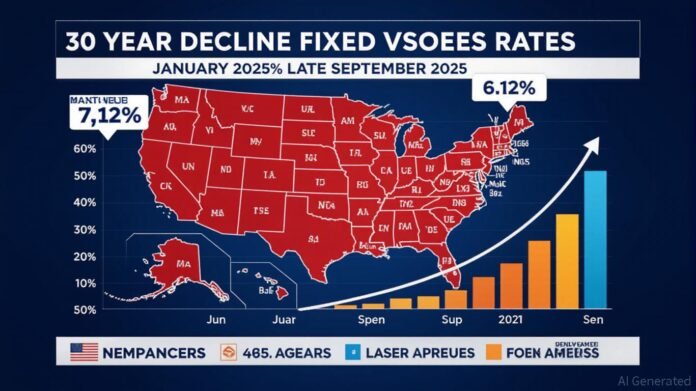

30 year refinance mortgage rates are drawing nationwide attention this September as millions of homeowners weigh whether the timing is right to lock in savings. After months of stubbornly high borrowing costs, rates have finally begun to ease, creating a window of opportunity that many borrowers don’t want to miss. This shift is especially meaningful for households that locked into mortgages during the peak of rate hikes over the last two years. With averages now moving downward, families are recalculating their options, comparing potential monthly savings, and evaluating how much interest they could shave off their loans over the full term. The renewed affordability has sparked a surge in refinance applications across the country, as homeowners seek to take advantage of conditions that could improve both short-term budgets and long-term financial stability.
Current Average Rates
As of mid-September 2025, the national average for a 30-year refinance mortgage rate sits around the mid-6% range. This marks a slight improvement compared to much of 2024, when averages hovered closer to the 7% mark.
While every borrower’s offer depends on credit score, income, equity, and location, today’s rate shift is significant enough to spark a surge in applications. Homeowners who locked into higher rates in the past few years now see an opportunity to refinance and save.
Why the Drop Matters
The 30-year refinance mortgage rate is the most common long-term option chosen by homeowners. Locking into a fixed rate provides stability, with predictable monthly payments spread over three decades. Even a half-point drop in the rate can translate into tens of thousands of dollars saved over the life of the loan.
The rate decline is particularly impactful because:
- It increases affordability for those struggling with high monthly payments.
- It helps households free up extra cash flow for other expenses or savings.
- It allows homeowners with adjustable-rate mortgages to transition into long-term stability.
Key Factors Driving Rates
Several economic trends are shaping the movement of refinance rates:
- Federal Reserve Policy: After holding rates higher to tame inflation, recent cuts in the benchmark rate are easing pressure on long-term borrowing costs.
- Treasury Yields: The 10-year Treasury yield, a major benchmark for mortgage pricing, has fallen, creating space for lenders to offer lower rates.
- Housing Demand: With purchase activity slowing in some markets, lenders are competing more aggressively for refinance business.
- Inflation Trends: Cooling inflation data has reassured markets that borrowing costs could continue moderating.
Comparison of Loan Types
When talking about refinancing, the 30-year fixed is not the only option. Here’s how it stacks up against others:
| Loan Type | Typical Rate | Pros | Cons |
|---|---|---|---|
| 30-Year Fixed Refinance | Mid-6% | Stability, predictable payments, lower monthly costs | Higher total interest paid |
| 15-Year Fixed Refinance | Low-6% or slightly lower | Faster payoff, less total interest | Higher monthly payments |
| Adjustable-Rate Mortgage (ARM) Refinance | Lower initial rate | Short-term savings, flexibility | Risk of rising rates after fixed period |
For many, the 30-year refinance mortgage remains the go-to choice, offering the balance of affordability and predictability.
Refinance Activity Surges
With rates ticking down, refinance applications have surged across the country. Lenders are reporting a sharp increase in demand compared to the quieter months earlier this year. Homeowners who refinanced into higher rates during 2022 and 2023 are especially motivated to revisit their options.
This spike reflects a “window of opportunity” mindset—many homeowners don’t want to miss out if rates climb again.
Who Benefits Most from Refinancing Now
Not everyone benefits equally from refinancing. The biggest winners today are:
- Homeowners with rates above 7%: They can realize substantial monthly savings.
- Those with strong credit: Borrowers with scores above 740 are securing the most competitive offers.
- Homeowners with equity: At least 20% equity helps avoid additional insurance requirements.
- Families seeking stability: Those in adjustable-rate loans are locking into fixed rates to avoid uncertainty.
How Much You Can Save
The potential savings depend on your current loan size, rate, and remaining term. For example:
- A homeowner with a $300,000 balance at 7.25% refinancing to 6.50% could save several hundred dollars each month.
- Over 30 years, the total interest savings can easily add up to tens of thousands.
While closing costs reduce the immediate benefit, long-term savings often outweigh the upfront expense, especially for those planning to stay in their home.
Steps to Prepare for Refinancing
If you’re considering refinancing, here are the steps to take now:
- Check Your Credit – Better credit means better rates. Review your report and fix errors.
- Calculate Your Break-Even Point – Figure out how many months of savings it takes to cover closing costs.
- Shop Around – Get quotes from multiple lenders, as even small differences matter over time.
- Decide on Loan Term – Consider whether to stick with 30 years or switch to 15 for faster payoff.
- Lock Your Rate – Rates change daily; if you see a favorable rate, locking can protect you.
Regional Trends in Rates
While national averages provide a general picture, refinance rates vary by state and city. Factors such as local housing markets, lender competition, and state regulations influence offers.
For example:
- Coastal markets with high loan amounts often see slightly higher rates due to jumbo loan dynamics.
- States with more competitive lending markets sometimes offer lower averages.
- Rural areas may see fewer options, with rates leaning closer to the national mean.
Risks and Considerations
Refinancing isn’t always the right move. Here are some cautions:
- Closing Costs: These can run 2–5% of the loan amount and must be factored in.
- Resetting the Clock: Restarting a 30-year term may increase the total interest paid, even if monthly payments drop.
- Job or Income Instability: Refinancing requires documentation of stable income and financial health.
- Housing Prices: Falling home values in some regions could limit equity and refinance eligibility.
Market Outlook for the Rest of 2025
Looking forward, analysts expect 30-year refinance mortgage rates to hover in the mid-6% range for much of the year. Further declines could occur if inflation continues to cool and the Federal Reserve implements additional cuts.
However, mortgage markets are sensitive. Any unexpected rise in inflation or strong economic rebound could halt or even reverse the current downward trend. Homeowners weighing a refinance should act with caution but also recognize the unique opportunity of today’s rates.
Practical Tips to Maximize Benefits
- Consider Making Extra Payments: Even on a 30-year refinance, adding small extra payments toward principal can shave years off the loan.
- Avoid Cash-Out Unless Necessary: While tempting, cash-out refinances increase your loan balance and future interest.
- Use Online Calculators: Estimate savings before committing to ensure refinancing makes sense.
- Work with Trusted Lenders: Choose established lenders with transparent fee structures.
Final Thoughts
The conversation around 30 year refinance mortgage rates in 2025 is at the forefront of U.S. housing and financial news. Rates in the mid-6% range have created a strong incentive for homeowners to revisit their mortgage terms, especially those burdened by higher rates from prior years.
Whether refinancing is right for you depends on your credit, equity, and long-term plans. For many, the opportunity to secure lower monthly payments and reduce interest makes now an attractive time to act.
As with any financial decision, weigh the costs against the potential savings, shop multiple lenders, and ensure the refinance aligns with your broader financial goals.
Are you considering a refinance this year? Share your thoughts in the comments and let’s see how others are navigating this market.
FAQ
Q: What is the current 30 year refinance mortgage rate in the U.S.?
A: The average national rate is in the mid-6% range as of September 2025.
Q: Who benefits most from refinancing right now?
A: Homeowners with older loans above 7%, strong credit scores, and at least 20% equity.
Q: Are refinance rates expected to go lower in 2025?
A: Rates may decline further if inflation cools and more Federal Reserve cuts occur, but they could also rise if the economy strengthens unexpectedly.
Disclaimer
This article reflects average national market conditions as of September 2025. Rates may vary based on credit, loan size, location, and lender policies. Always consult multiple lenders before making financial decisions.