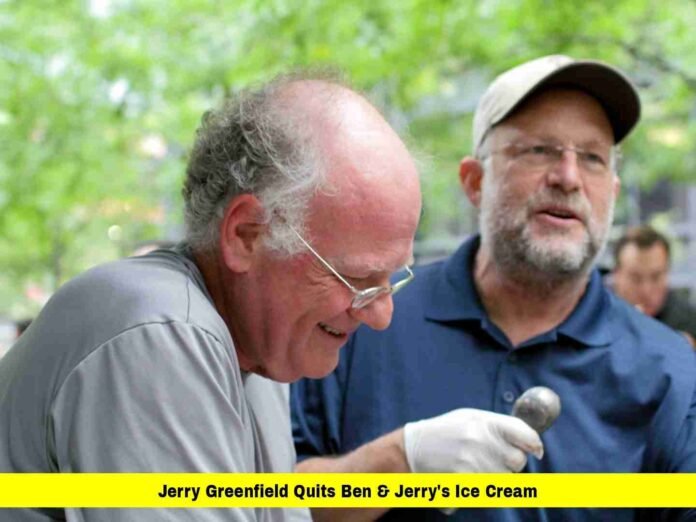

Jerry Greenfield has officially stepped down from Ben & Jerry’s after nearly five decades, citing a loss of the company’s original social mission under its parent company Unilever. His departure marks the end of an era for the iconic brand and has ignited widespread discussion about corporate control versus brand activism. Greenfield’s decision has been described as painful but necessary, as he believes the company can no longer speak freely on social justice issues.
Why Jerry Greenfield Resigned
Greenfield stated that the independence guaranteed when Unilever acquired Ben & Jerry’s in 2000 has eroded over time. According to him, the original deal promised the brand freedom to pursue social causes through its independent board. Over the years, however, that autonomy has been restricted, especially on issues like human rights, climate action, and political conflicts.
He also expressed frustration over recent internal changes within Unilever, including the decision to reorganize its ice cream division under a new umbrella called the Magnum Ice Cream Company. Greenfield believes this restructuring further sidelines the brand’s activist voice and threatens its identity.
Disputes Over Social Mission
For decades, Ben & Jerry’s has taken public stances on social issues, from racial justice to environmental sustainability. But Greenfield says the brand has faced mounting pushback from Unilever whenever it spoke out on controversial global topics.
One major flashpoint was the company’s decision in 2021 to end sales in Israeli settlements, which sparked intense legal and political backlash. Greenfield says that more recently, attempts to comment on humanitarian issues in Gaza and other regions were blocked entirely by corporate leadership.
What Jerry Said About His Exit
In his resignation letter, Greenfield called the situation “deeply disappointing” and said he could no longer work “in good conscience” under current conditions. He emphasized that social activism has always been a central part of Ben & Jerry’s identity and not just a marketing strategy.
He also shared that stepping away was not easy, but he feels he can better uphold those values from outside the company. Greenfield hinted at plans to continue supporting causes he believes in independently, though he has not revealed specifics yet.
Unilever’s Response to the Departure
Unilever acknowledged Greenfield’s resignation and thanked him for his contributions but disagreed with his criticisms. The company stated that it remains committed to Ben & Jerry’s heritage of social engagement, even as it integrates the brand into its larger ice cream portfolio.
Meanwhile, Ben & Jerry’s independent board has accused Unilever of undermining its social mission and has pursued legal action to preserve its authority. This ongoing dispute highlights the tension between maintaining a brand’s activist identity and operating under a global corporate parent.
Timeline of Key Events
| Date | Event |
|---|---|
| 2000 | Unilever acquires Ben & Jerry’s while promising social mission autonomy. |
| 2021 | Ben & Jerry’s stops sales in Israeli settlements, sparking backlash. |
| March 2025 | Ben & Jerry’s sues Unilever, citing suppression of activism. |
| September 9, 2025 | Greenfield and co-founder Ben Cohen request separation from Unilever. |
| September 16, 2025 | Jerry Greenfield announces his resignation. |
What This Means for Ben & Jerry’s
Greenfield’s departure leaves his longtime business partner Ben Cohen as the sole co-founder still involved. Cohen has not resigned and continues pushing for Ben & Jerry’s to either regain its independence or be sold to mission-aligned investors.
The new structure under the Magnum Ice Cream Company will likely redefine how the brand operates. It is unclear how much say Ben & Jerry’s will have on activism-related issues going forward, but many fans and former employees fear its progressive spirit may fade without Greenfield’s influence.
Wider Implications
Jerry Greenfield’s resignation underscores a larger debate in the business world: can brands rooted in activism maintain their values under corporate ownership? His exit suggests that even strong founding ideals can struggle to survive within multinational conglomerates.
This turning point could influence how other mission-driven brands approach partnerships, mergers, or acquisitions, knowing they may risk losing their voice on social issues.
The news that Jerry quits Ben & Jerry’s ice cream is more than just a leadership change—it is a moment that questions the future of socially conscious business. What do you think about his decision and its impact on the brand’s future? Share your thoughts or questions below.