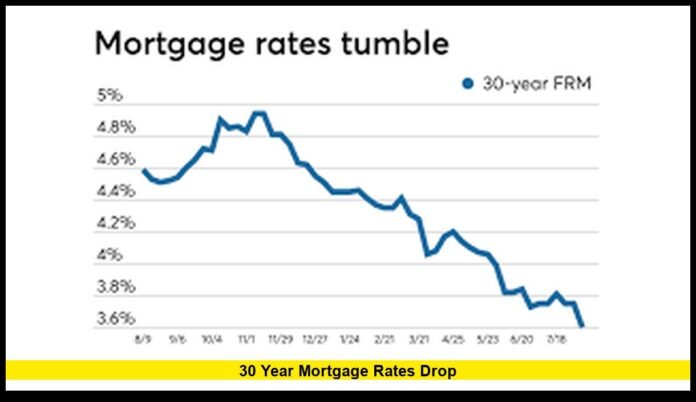

The story dominating the housing market this week is that 30 year mortgage rates have dropped to their lowest levels in nearly a year, settling around the mid-6% range. After months of elevated borrowing costs, this decline is giving both buyers and homeowners a long-awaited window of opportunity.
Mortgage applications, refinance activity, and housing sentiment are all shifting in response. For many Americans, the question now is how long this trend will last—and whether locking in a rate today makes more sense than waiting for further changes.
What Is Driving the Drop in 30 Year Mortgage Rates
Several factors are pushing rates downward:
- Federal Reserve expectations – Financial markets anticipate that the Federal Reserve will cut interest rates in upcoming meetings. While the Fed doesn’t directly set mortgage rates, its decisions strongly influence the broader credit environment.
- Bond yields easing – The 10-year Treasury yield, a key benchmark for long-term borrowing, has been moving lower. Since lenders base fixed mortgage offers on Treasury yields, falling yields translate into lower mortgage rates.
- Cooling economy – Job growth has slowed, and unemployment claims are edging higher. This signals a softer economy, which reduces inflationary pressure and supports lower interest costs across lending markets.
Current Levels of 30 Year Mortgage Rates
As of mid-September 2025, national averages for 30-year fixed mortgage rates are hovering around 6.3% to 6.4%, marking the lowest levels since late 2024. Just a few months ago, rates were consistently above 7%, and many buyers were forced to delay home purchases or reconsider their budgets.
This sudden decline is meaningful for affordability:
| Timeframe | Average 30-Year Fixed Rate |
|---|---|
| September 2025 (current) | 6.3% – 6.4% |
| July 2025 | 7.0% – 7.1% |
| October 2024 | 6.2% – 6.3% |
| Pandemic Lows (2020–2021) | 2.7% – 3.0% |
While rates remain far higher than the record lows of the pandemic, the move below 6.5% is seen as a turning point that could breathe new life into the housing market.
Impact on Borrowers
Falling 30 year mortgage rates have already changed borrower behavior:
- Refinancing surges – Homeowners with loans locked above 7% are rushing to refinance. Even a 0.5% drop in interest rates can save hundreds of dollars a month on large balances.
- More purchase applications – First-time buyers are returning as monthly payments become somewhat more manageable. The difference between a 7% rate and a 6.3% rate on a $400,000 loan is over $180 in monthly payments.
- Increased competition among lenders – Banks and mortgage companies are cutting rates more aggressively to capture new customers, leading to more competitive offers for well-qualified borrowers.
Federal Reserve Policy Outlook
The Federal Reserve remains central to what happens next. Markets widely expect a rate cut of at least 0.25% in the coming months, with some analysts suggesting multiple cuts before the end of 2025.
- A rate cut would likely lower borrowing costs across the economy, including mortgages.
- If inflation continues to ease, the Fed may pursue more aggressive cuts.
- Conversely, if inflation surprises to the upside, the Fed could slow down or pause cuts, which might halt the decline in mortgage rates.
Risks to Watch
While the decline in 30 year mortgage rates is welcome news, several risks could limit how much further they fall:
- Inflation concerns – If consumer prices accelerate again, lenders will demand higher interest to offset inflation risk.
- Bond market volatility – Treasury yields could reverse direction if investors lose confidence in U.S. fiscal or global economic stability.
- Housing affordability issues – Even with rates dipping, home prices remain elevated. This keeps affordability strained for many Americans, particularly in coastal states and urban centers.
- Regional differences – Not all borrowers benefit equally. Local markets, credit scores, loan sizes, and down payments create wide variations in the actual rate offered.
Historical Context for 30 Year Mortgage Rates
Looking back helps put today’s numbers in perspective:
- 1980s: Rates peaked at nearly 18%, making today’s levels seem modest by comparison.
- 2000s: Typical rates hovered between 5% and 7% for much of the decade.
- 2020–2021: Pandemic-era rates plunged below 3%, an unprecedented low that fueled a historic buying and refinancing boom.
- 2022–2024: Inflation and aggressive Fed tightening pushed rates back above 7%, the highest in two decades.
At present, 30 year mortgage rates remain elevated relative to the pandemic but represent significant relief compared to earlier highs in 2025.
How Buyers Should Approach This Market
For Americans thinking about buying a home, here are some practical strategies given the current interest rate environment:
- Check credit profiles carefully – A strong credit score can reduce your rate by a quarter-point or more.
- Shop multiple lenders – Rates and fees vary, so comparing offers remains critical.
- Lock in rates strategically – If you see a rate you like, consider locking it before markets shift again.
- Evaluate total costs – Look beyond the rate. Factor in insurance, property taxes, and closing costs.
- Consider shorter-term or ARM options – If you plan to sell or refinance within 5–10 years, adjustable-rate or 15-year loans may save more.
Housing Market Implications
The decline in 30 year mortgage rates could have ripple effects:
- Higher buyer demand – Lower rates bring more people back into the market.
- Home price stabilization – Falling rates may support prices in areas that were starting to cool.
- Builder confidence improving – More affordable financing encourages new construction projects.
- Regional variation – Some markets may see bidding wars reignite, while others may only see modest improvements.
What To Expect in the Coming Months
Looking ahead, several factors will determine whether rates fall further:
- Inflation readings will shape how aggressively the Federal Reserve moves.
- Labor market data will indicate whether the economy is slowing enough to justify further cuts.
- Global market stability will influence investor demand for U.S. bonds, directly affecting mortgage pricing.
- Housing supply will matter—if inventory remains tight, even modestly lower rates could reignite upward price pressure.
Bottom Line
The drop in 30 year mortgage rates to the mid-6% range represents a major shift for the U.S. housing market. After more than a year of stubbornly high borrowing costs, the decline opens new opportunities for both buyers and homeowners.
Still, uncertainty remains. Inflation, Fed policy, and global events could swing rates in either direction. For now, the message is clear: rates are lower than they’ve been in months, and borrowers are seizing the moment.
Conclusion
The housing market has been waiting for a break, and the easing of 30 year mortgage rates is delivering one. With rates falling, refinances picking up, and buying activity slowly increasing, the second half of 2025 is shaping up to be a turning point for many households.
Whether you’re looking to refinance or step into homeownership, now may be the time to explore options before conditions shift again. What would you do—lock in today’s rates or wait for the next move?
FAQ
Q: What are the current average 30 year mortgage rates in the U.S.?
A: Rates are currently averaging between 6.3% and 6.4%, the lowest levels in nearly a year.
Q: Will mortgage rates continue to drop?
A: Rates may dip further if the Federal Reserve cuts interest rates, but inflation or global factors could slow the decline.
Q: Is now a good time to refinance?
A: Homeowners with mortgages above 7% may benefit significantly by refinancing at current levels.
Disclaimer
This article reflects the most current verified updates available as of September 17, 2025. Mortgage rates vary by lender, borrower profile, and regional conditions.