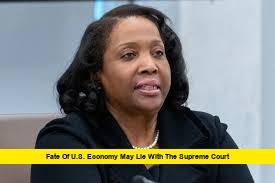

The fate of U.S. economy may lie with the Supreme Court as two major legal battles threaten to reshape the foundation of American economic policy. Former President Donald Trump’s controversial tariffs and his unprecedented attempt to remove a Federal Reserve governor are both moving closer to the nation’s highest court, creating uncertainty for markets, businesses, and future administrations.
Tariffs under legal fire
One of the most significant cases involves Trump’s sweeping global tariffs. A federal appeals court recently ruled that large portions of these tariffs were unlawful, stating that the president exceeded his authority by stretching emergency economic powers beyond their intended scope. However, the court paused enforcement of its decision until mid-October, allowing time for an appeal to the Supreme Court.
At stake is not only the president’s ability to impose tariffs without congressional approval, but also billions of dollars in potential refunds to affected importers and businesses. If the tariffs are struck down permanently, analysts estimate that the government could face refund liabilities well above one hundred billion dollars. For small and mid-sized companies that absorbed the costs of higher import duties, the ruling has brought both relief and anxiety, since final resolution depends on what the Supreme Court decides.
Trump and his allies argue that tariffs are essential for protecting American industries, national security, and negotiating leverage with global partners. Critics counter that bypassing Congress sets a dangerous precedent, allowing unilateral trade policies that disrupt supply chains and drive up consumer costs.
The Federal Reserve clash
Alongside the tariff fight, Trump is also engaged in a separate showdown with the Federal Reserve. His move to dismiss Governor Lisa Cook sparked a legal challenge that could fundamentally alter the independence of America’s central bank. Cook, who joined the Fed’s board in 2022, has argued that her removal violates the law, which permits governors to be dismissed only “for cause.”
The White House justified the firing by citing alleged misconduct, but Cook and her legal team claim the allegations are politically motivated and do not meet the legal standard. Her lawsuit has already been filed, and early hearings suggest that the dispute will advance quickly through the courts. Many experts believe the case could soon reach the Supreme Court, given its constitutional implications.
If the Court sides with Trump, future presidents may gain broader authority to reshape the Federal Reserve to align with their political agendas. Supporters of Fed independence warn this would undermine investor confidence and monetary stability, as central bank decisions could be swayed by short-term political calculations rather than long-term economic health.
Two battles, one court
What makes these cases extraordinary is that both strike at the heart of separation of powers in the U.S. government. The tariff dispute questions whether a president can act alone in shaping trade policy under emergency phttps://legalunitedstates.com/us-inflation-edges-up-to-2-7-amid-tariff-driven-price-pressures/owers. The Federal Reserve battle asks whether the executive branch can override legal protections designed to shield monetary policy from political interference.
These are not abstract debates—they directly affect American households, businesses, and the global economy. The Supreme Court’s rulings could determine:
- Whether businesses receive massive refunds for years of tariff payments.
- How freely future presidents can impose or lift trade restrictions.
- Whether the Federal Reserve remains independent or becomes vulnerable to political turnover.
- How markets interpret the balance of power between branches of government.
Economic stakes for the future
Economists warn that if both Trump’s policies are overturned, it could bring short-term relief but long-term turbulence. Ending the tariffs may lower prices for consumers and importers, but the refund liabilities could put pressure on federal finances. Meanwhile, affirming Fed independence would reassure investors, yet could spark political backlash from leaders who want greater influence over monetary policy.
On the other hand, if Trump’s positions are upheld, the presidency could emerge with sweeping new economic powers. That outcome would reshape the relationship between the executive branch, Congress, and independent agencies, giving future presidents the tools to rapidly change U.S. trade and monetary policy without waiting for legislative approval.
Conclusion
The fate of U.S. economy may lie with the Supreme Court more than with any policy debate in Congress or the White House. Two monumental decisions—on tariffs and on the Federal Reserve—are poised to define the limits of presidential authority for decades to come. As the justices prepare to weigh these disputes, businesses, investors, and everyday Americans are bracing for rulings that will ripple far beyond the courtroom.
What do you think? Should the Court limit presidential power in these areas, or should presidents retain the authority to act decisively on economic matters? Share your thoughts in the comments and join the discussion.