
The Solar System has once again astonished scientists as NASA’s Voyager 1 spacecraft detected an intensely hot, high-energy region just beyond the heliopause—the invisible boundary where the solar wind meets interstellar space. Temperatures in this turbulent zone are estimated to reach nearly 50,000 °C, yet there is no actual fire. Instead, charged particles and magnetic fields collide to create conditions unlike anything previously recorded at the solar frontier.
Even more remarkable, engineers extended the life of the mission earlier this year by reactivating Voyager 1’s backup thrusters, dormant since 2004. This technical achievement has kept the probe properly oriented, allowing it to continue transmitting invaluable data from nearly 25 billion kilometers away.
Key Points Summary
💡 For readers who want the essentials fast:
- Voyager 1 identified a super-heated region at the Solar System’s edge.
- NASA engineers restored Voyager 1’s backup thrusters after 21 years of inactivity.
- Seven massive “superclouds” of gas were mapped near our Solar System.
- Interstellar comet 3I/ATLAS is racing through at over 130,000 mph.
- Pluto’s climate is uniquely shaped by high-altitude haze that cools its atmosphere.
Enormous Superclouds Near the Solar System
Astronomers recently discovered seven gigantic gas “superclouds” surrounding our local galactic neighborhood. These wave-like structures stretch thousands of light-years and may be critical zones for star formation. Their arrangement suggests the Milky Way’s interstellar medium is far more dynamic and organized than previously thought. The discovery of five entirely new superclouds has redefined how scientists map the cosmic environment just beyond the Solar System.
Interstellar Comet 3I/ATLAS Captures Global Attention
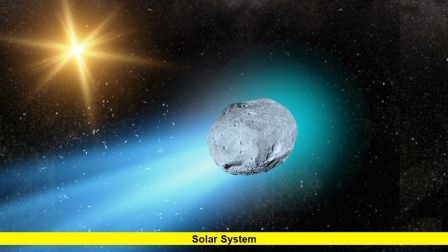
Adding to the excitement, a rare visitor named 3I/ATLAS has entered the Solar System. This comet, first spotted in July 2025, is only the third confirmed interstellar object to pass through our region of space. Travelling faster than 130,000 miles per hour, it carries a long glowing tail and displays an unusual reddish surface that has intrigued planetary scientists.
3I/ATLAS is believed to be older than the Solar System itself, possibly dating back over 7.6 billion years. While most experts classify it as a natural comet, some researchers have even speculated about more exotic origins due to its unusual brightness patterns and trajectory. Regardless of its nature, it presents a once-in-a-lifetime opportunity for telescopes on Earth and in orbit to study a traveler from another star system.
Pluto’s Strange and Unexpected Climate
Meanwhile, the dwarf planet Pluto continues to surprise researchers. Observations using advanced space telescopes have confirmed that Pluto’s thin atmosphere is governed by an entirely unique cooling process. Its high-altitude haze, composed of organic molecules from methane and nitrogen, absorbs incoming sunlight and then radiates the energy away as infrared heat.
This mechanism keeps Pluto’s atmosphere colder than expected and sets it apart from every other known world in the Solar System. The discovery not only sheds light on Pluto’s current climate but also provides clues about atmospheric behavior on ancient Earth and other icy bodies beyond Neptune.
Why These Discoveries Matter
Taken together, these breakthroughs highlight how rapidly our knowledge of the Solar System is expanding. Voyager 1 continues to serve as humanity’s outpost in interstellar space, uncovering mysteries at the very edge of the Sun’s influence. The mapping of superclouds reveals the powerful galactic environment shaping our cosmic backyard. The arrival of 3I/ATLAS offers a rare glimpse into matter from another star system, while Pluto’s haze-driven cooling points to complex atmospheric dynamics we are only beginning to understand.
| Discovery Area | Key Insight |
|---|---|
| Voyager 1 | Detected high-energy “firewall” beyond the heliopause |
| Superclouds | Seven massive structures mapped near the Solar System |
| 3I/ATLAS | Third known interstellar object, moving at extreme speeds |
| Pluto | Unique climate cooling process confirmed |
The Solar System remains a place of endless surprises, from the smallest atmospheric shifts to colossal galactic structures. Each new discovery not only reshapes scientific theories but also sparks fresh questions about our origins and our place in the cosmos.
Which of these findings fascinates you most—the blazing frontier, the mysterious interstellar comet, or Pluto’s strange weather? Share your thoughts and let’s keep the conversation going.