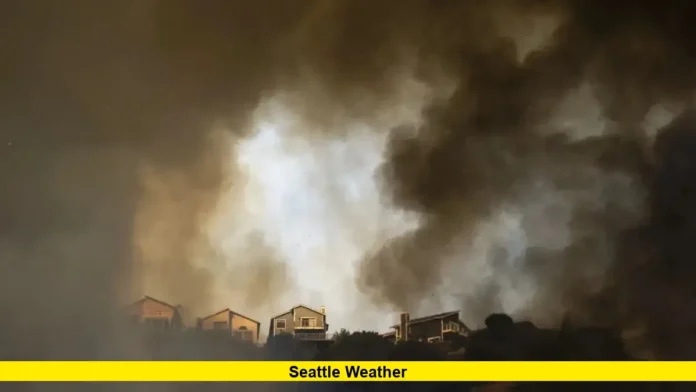

Seattle weather conditions take a concerning turn as wildfire smoke moves in from surrounding regions, creating hazy skies and degraded air quality across the Pacific Northwest. The acrid smell of wildfire smoke has drifted into the Seattle area recently, with conditions affecting visibility and air quality throughout western Washington.
Current air quality monitoring stations across the region show fluctuating conditions as smoke particles settle over the metropolitan area. Seattle’s Air Quality Index currently registers as “Good” according to real-time monitoring data, though conditions can change rapidly as wind patterns shift smoke from active wildfires.
Health Impacts and Air Quality Concerns
The arrival of wildfire smoke brings immediate health concerns for Seattle residents, particularly those with respiratory conditions. Wildfire smoke represents a major threat to human health, causing wheezing, coughing, heart and lung disease. Fine particulate matter (PM2.5) from burning vegetation can penetrate deep into lung tissue, making outdoor activities potentially hazardous.
Vulnerable populations including children, elderly residents, and individuals with asthma or heart conditions face elevated risks during smoke events. Local health officials recommend limiting outdoor activities when air quality deteriorates and keeping windows closed to prevent indoor air contamination.
Regional Fire Activity Driving Smoke Conditions
The smoke affecting Seattle weather patterns originates from multiple wildfire sources across the region. Climate change continues to reduce winter snowpack while producing hotter and drier summers, increasing the number of acres burned by wildfires annually. These changing conditions make smoke events increasingly common during late summer months.
Washington state agencies coordinate closely with federal partners to track smoke movement and issue public health advisories. The collaborative effort involves the Department of Ecology, National Weather Service, and U.S. Forest Service working together to provide accurate forecasts and safety recommendations.
Protective Measures for Residents
During periods when wildfire smoke affects air quality, Seattle residents should take several precautionary steps:
- Monitor local air quality indexes through official government websites
- Keep doors and windows closed when smoke is visible
- Use air purifiers with HEPA filters indoors
- Avoid outdoor exercise and strenuous activities
- Consider N95 masks for necessary outdoor activities
The City of Seattle provides comprehensive guidance on wildfire smoke safety to help residents protect themselves and their families from outdoor smoke exposure.
Weather Pattern Influences on Smoke Movement
Atmospheric conditions play a crucial role in determining how long smoke lingers over the Seattle area. Temperature inversions can trap smoke close to ground level, while wind patterns determine the direction and intensity of smoke movement from fire sources.
Meteorologists track upper-level wind flows and pressure systems that influence smoke dispersion. Relief typically comes when strong weather systems move through the region, clearing the atmosphere and improving visibility.
Looking Ahead: Seasonal Smoke Patterns
Late summer and early fall represent peak wildfire season across the Pacific Northwest, meaning Seattle weather may continue experiencing periodic smoke impacts. Recent summer seasons have made the scent of wildfire smoke all too familiar for area residents.
Climate scientists project that smoke events may become more frequent as regional fire seasons extend and intensify. Residents should prepare for potential air quality impacts during traditionally dry months and stay informed about current conditions through official monitoring channels.
The intersection of wildfire activity and weather patterns will continue shaping Seattle’s air quality throughout the remainder of fire season. Staying informed and prepared helps protect public health during these challenging atmospheric conditions.
What steps are you taking to protect your family’s health during wildfire smoke events? Share your experiences and tips with fellow residents in the comments below.