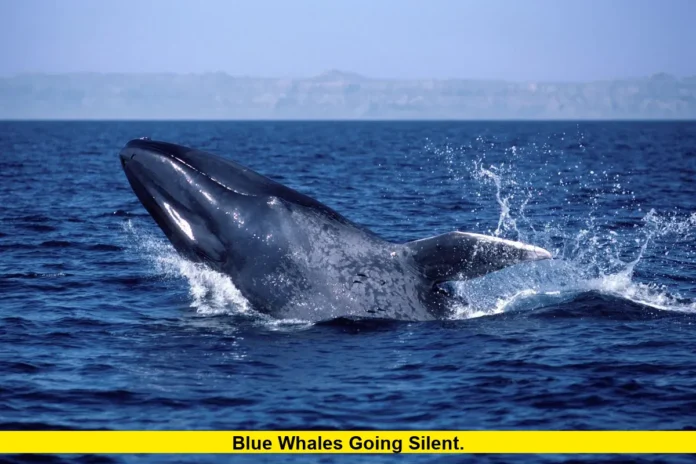

Blue whales going silent has become an alarming phenomenon that marine scientists say signals serious trouble for ocean ecosystems. Recent studies show blue whale vocalizations have dropped by almost 40 percent, creating underwater environments that researchers describe as eerily quiet where once there was a rich symphony of whale songs.
The silence stems from a devastating combination of marine heatwaves, food scarcity, and environmental disruptions that have left the world’s largest animals struggling to survive. A six-year study published this year, which monitored whale songs using underwater hydrophones off California’s coast, revealed clear patterns linking the silence to environmental stress.
Marine Heatwaves Devastate Whale Food Sources
The crisis began with a massive marine heatwave known as “The Blob” that struck the Pacific Ocean between 2013-2016. This unprecedented warming event covered over 2,000 miles of ocean, with temperatures reaching 4.5°F above normal in some areas. The extreme heat decimated krill populations—the tiny shrimp-like creatures that blue whales depend on for survival.
“It caused the most widespread poisoning of marine mammals ever documented,” says John Ryan, biological oceanographer at the Monterey Bay Aquarium Research Institute. “These were hard times for whales”. The toxic algae blooms that followed further compromised the marine food web, leaving blue whales with virtually no reliable food sources.
Scientists discovered that blue whales, unlike humpbacks with more diverse diets, couldn’t adapt to these harsh conditions. Their massive feeding apparatus requires dense concentrations of krill to make each dive worthwhile. When those swarms disappeared, the whales faced an impossible choice: spend all their energy searching for scarce food or maintain their complex vocal communications.
Global Pattern Emerges Across Ocean Basins
The phenomenon isn’t limited to California waters. Research teams studying blue whales between New Zealand’s islands from 2016-2018 documented similar patterns of silence during the same period. Dawn Barlow, an ecologist at Oregon State University’s Marine Mammal Institute, found that during abnormally warm water years, blue whales produced fewer feeding calls in spring and summer, followed by reduced reproductive songs in fall.
This global pattern suggests the crisis extends far beyond isolated incidents. Ocean temperatures are rising worldwide due to climate change, with the oceans absorbing over 90 percent of excess heat from greenhouse gas emissions. Recent studies show marine heatwaves have tripled in duration since the 1940s and are now approximately 1°C hotter on average.
The implications stretch beyond individual whale populations:
- Ecosystem Health: Blue whales serve as sentinels for entire ocean ecosystems
- Food Web Collapse: Krill shortages affect multiple marine species
- Reproductive Impact: Stressed whales delay breeding, threatening population recovery
- Long-term Consequences: Effects persist years after heatwaves end
Scientists Race to Understand Ocean Changes Through Sound
Marine researchers now use sophisticated underwater listening networks to monitor ocean health through acoustic data. These hydrophones, placed strategically across ocean floors, capture the complex soundscapes that reveal environmental changes invisible to surface observers.
“When you really break it down, it’s like trying to sing while you’re starving,” Ryan explains about the whale behavior. “They were spending all their time just trying to find food”. The acoustic data provides real-time evidence of ecosystem stress that traditional monitoring methods might miss for years.
The silence also reflects increasing human impact on ocean environments. Ship traffic, industrial noise, and climate-related disruptions create cumulative pressure on marine mammals already struggling with environmental changes. The brief reduction in human activity during COVID-19 lockdowns demonstrated how profoundly human presence affects marine behavior patterns.
Warning Signs Point to Irreversible Ocean Changes
Marine biologists warn that continued warming could push ocean ecosystems past critical tipping points. “There’s a chance that one of these events becomes a tipping point, and that may not return to the state we had before,” says Kelly Benoit-Bird, Monterey Bay Aquarium marine biologist.
The consequences extend beyond whale populations to global climate regulation, commercial fisheries, and marine biodiversity. Blue whales’ 80-year lifespans mean population impacts unfold slowly, making early warning signs like vocal changes critically important for conservation efforts.
Current monitoring efforts focus on expanding acoustic networks to track changes across ocean basins. Scientists emphasize that understanding these underwater soundscapes could provide essential tools for marine conservation and ecosystem management as climate impacts intensify.
The growing silence in our oceans tells a story that demands immediate attention. As blue whales struggle to adapt to rapidly changing conditions, their fading songs serve as an urgent call for action to protect marine ecosystems before irreversible damage occurs. What patterns are you noticing in ocean health news, and how do you think we can better protect these magnificent creatures?