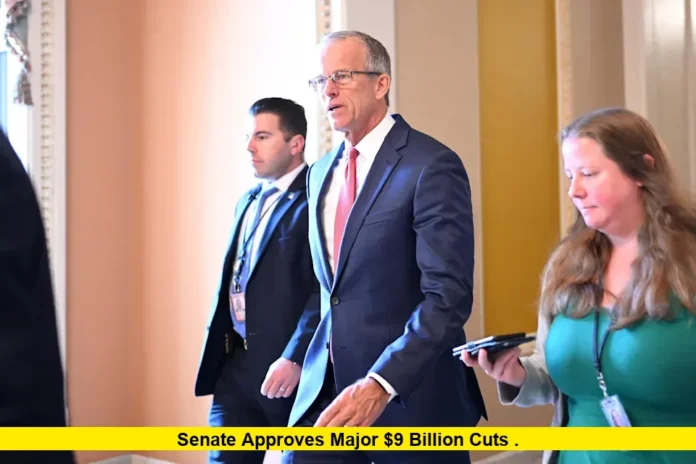

In a sharp move that stirred debate across Washington, the U.S. Senate passed a $9 billion package slashing federal funding for foreign aid and public media. This decision reflects the Trump administration’s focus on reducing government spending, but it raises concerns about the impact on global humanitarian efforts and public broadcasting services.
The vote concluded early Thursday morning with a close 51-48 outcome. Most Republicans backed the cuts, while all Democrats and two Republican senators—Susan Collins of Maine and Lisa Murkowski of Alaska—opposed the measure. Senator Tina Smith (D-MN) missed the vote due to a hospitalization but had voiced opposition beforehand.
Key Points Summary
- Senate approved $9 billion in cuts—$8 billion from foreign aid, $1.1 billion from public broadcasting.
- The vote was 51-48 after over 12 hours of debate.
- Certain aid programs, including HIV/AIDS prevention, remained protected.
- The House must approve the revised bill by Friday.
- The cuts impact USAID programs, global health initiatives, NPR, PBS, and many community stations.
Breakdown of Affected Funding
The bill rescinds previously allocated funds across multiple agencies and programs:
| Area | Approximate Cut | Impact |
|---|---|---|
| Foreign Aid | $8 billion | Includes USAID, food aid, global health, development |
| Public Broadcasting | $1.1 billion | Affects Corporation for Public Broadcasting, NPR, PBS |
Advocates warn cuts could lead to reduced services and impaired ability to respond to global crises. Republicans argue these removals eliminate excessive or ineffective spending.
Amendments and Exceptions
Despite the large cuts, several key programs were spared through amendments during debate. Funding for fighting HIV/AIDS, tuberculosis, and malaria, as well as support for allied countries like Jordan and Egypt, remained untouched. Additionally, some tribal and education-related programs were exempted after intense negotiations.
Senator John Thune (R-SD), who spearheaded changes to protect South Dakota’s tribal broadcasting services, emphasized the importance of maintaining those community connections. Still, public media groups worldwide express concern about the uncertain future of their operations.
Political and Public Reactions
Supporters tout the vote as a win for fiscal responsibility and cutting redundant government spending. In contrast, opponents call the move shortsighted, warning it undermines U.S. influence abroad and weakens independent journalism.
Senator Susan Collins highlighted frustrations over the lack of transparency prior to voting, noting, “It’s difficult to assess what will be lost due to this rushed procedure.”
Democrats bench Senator Bernie Sanders stated these cuts could “harm vulnerable populations” reliant on U.S. aid and diminish America’s global leadership.
What Happens Next?
Since the Senate’s version includes modifications, the House of Representatives must agree to the changes through another vote, expected before Friday’s deadline. If the House passes the bill, President Trump is likely to sign it promptly. Failure to pass could maintain current funding levels, setting the stage for further negotiations.
This development marks a turning point in federal budget debates, signaling a tougher stance on discretionary spending and potentially shaping future rescission efforts on a broader scale.
Global and Community Impact
International aid organizations caution that cutting billions from foreign assistance risks depriving millions of essential food, health care, and educational resources. Likewise, public radio and television stations nationwide face tough choices about programming, staffing, and community outreach, which could affect millions of Americans.
Many smaller public media outlets rely heavily on CPB funding covered by this bill. Their survival depends on how they adapt or seek alternative sources of revenue.
Final Thoughts
The Senate’s passage of this controversial bill marks the beginning of an intense process that will play out over the coming days. The debate highlights the tension between cutting government spending and maintaining critical programs that serve both U.S. interests and communities worldwide.
What are your thoughts on these significant budget cuts to America’s foreign aid and public media? Join the conversation and share your views below. Stay connected here for continuing updates as the story evolves.