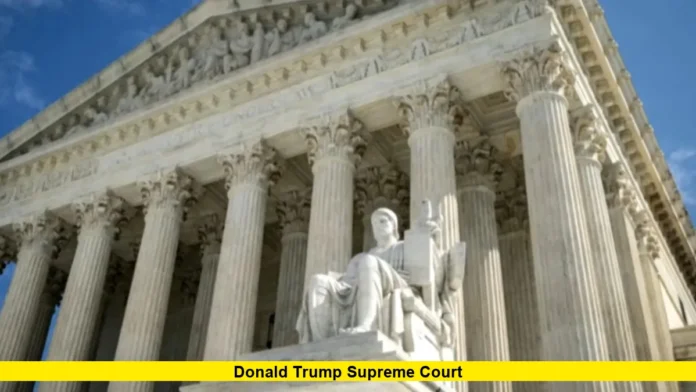

The Supreme Court has recently cleared the path for President Donald Trump to proceed with his controversial plans for mass firings and restructuring at federal agencies, marking a significant development in his administration’s efforts to downsize the federal workforce. This ruling lifts a lower court injunction that had blocked widespread layoffs, allowing Trump’s executive order and related directives to move forward, potentially impacting tens of thousands of federal employees across multiple departments.
Supreme Court’s Pivotal Ruling on Trump’s Federal Workforce Cuts
On July 8, 2025, the Supreme Court issued an unsigned order that overturned a prior district court ruling which had temporarily halted the Trump administration’s mass layoff plans. The court stated it believes the government is “likely to succeed” in its argument that the executive order directing workforce reductions is lawful, though it did not rule on the legality of specific layoffs or reorganization plans within federal agencies. This decision enables agencies such as Housing and Urban Development, Treasury, Veterans Affairs, and others to resume their workforce reduction efforts without further legal obstruction for now.
The ruling is a major victory for Trump’s push to reshape and streamline the federal government, reflecting the Court’s continued deference to presidential authority in this area. However, it also sparked dissent from Justice Ketanji Brown Jackson, who warned of the severe real-world consequences, including mass terminations and the dismantling of federal programs and services. Justice Sonia Sotomayor also expressed concerns but concurred with the narrow scope of the ruling.
Impact on Federal Agencies and Workforce
The Trump administration’s executive order, issued in February 2025, called for agencies to prepare for significant reductions in force (RIFs), aiming to cut thousands of federal jobs as part of a broader government downsizing agenda. Some of the proposed cuts include:
- Approximately 10,000 positions at the Centers for Disease Control and Prevention and the National Institutes of Health.
- A 40% reduction in Internal Revenue Service staff within the Treasury Department.
- Initial plans to cut 80,000 jobs at the Department of Veterans Affairs, later revised to 30,000.
Beyond these, dozens of other agencies, including Agriculture, Energy, Labor, State, Human Services, and the Environmental Protection Agency, are expected to implement workforce cuts. The administration’s Department of Government Efficiency (DOGE) is spearheading these efforts, which have already seen tens of thousands of federal employees leave through layoffs, deferred resignations, or other means.
Legal and Political Controversy Surrounding the Layoffs
The mass layoffs have faced strong opposition from unions, advocacy groups, and local governments, who argue that such sweeping cuts require congressional approval and that the executive order circumvents this constitutional requirement. They warn that these reductions threaten critical government functions, including food safety, healthcare for veterans, and public health programs.
Lower courts had sided with these challengers, issuing injunctions to halt the layoffs, but the Supreme Court’s recent order temporarily lifts these barriers. The administration maintains that the president has the constitutional authority to reorganize the government to improve efficiency and reduce waste, a stance the Supreme Court appears to support at this stage.
Key Points Summary
- The Supreme Court lifted a lower court injunction blocking Trump’s mass federal layoffs.
- The ruling allows agencies to resume workforce reductions affecting tens of thousands of federal employees.
- Proposed cuts span multiple departments including Treasury, Veterans Affairs, and Health agencies.
- The decision reflects the Court’s tentative support for executive authority in government reorganization.
- Justice Ketanji Brown Jackson dissented, warning of severe consequences.
- Unions and advocacy groups continue to challenge the legality of the layoffs, citing lack of congressional approval.
What’s Next?
While the Supreme Court’s order permits the Trump administration to proceed with its restructuring plans, the broader legal battle over the scope of presidential authority in downsizing federal agencies is ongoing. Future court decisions could still impact the final outcome of these layoffs. Meanwhile, federal agencies are expected to move swiftly in implementing the workforce reductions, reshaping the federal government’s size and operations in the months ahead.
Stay informed on this evolving story as the Trump administration’s efforts to downsize the federal workforce continue to unfold.
Take action to stay updated on federal workforce changes and understand how these developments might affect public services and government operations.