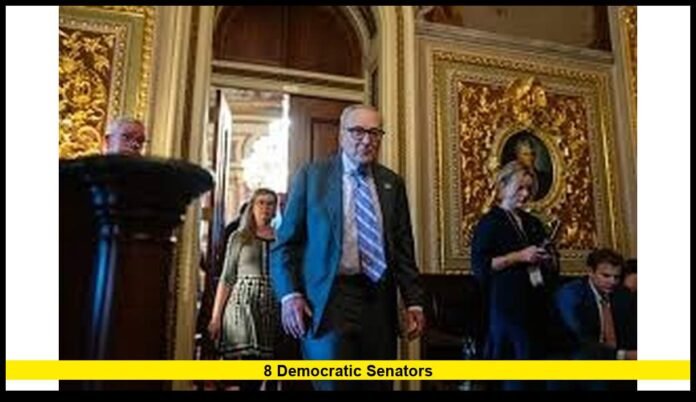

Moderate Democrats Join Republicans in Historic Senate Shift
The spotlight in Washington shines brightly on 8 Democratic senators who, late on November 9, joined forces with Republicans to advance legislation aimed at reopening the federal government after a lengthy shutdown.
What Happened and Who Are They?
After 40 days of a partial federal shutdown, the U.S. Senate executed a pivotal procedural vote. The measure—designed to restore government funding through January 30, 2026—passed by a 60-40 margin. Eight Democrats crossed party lines to help achieve the super-majority threshold needed to move the bill forward.
Here are the eight lawmakers who voted in favor:
- Catherine Cortez Masto (Nevada)
- Dick Durbin (Illinois)
- John Fetterman (Pennsylvania)
- Maggie Hassan (New Hampshire)
- Tim Kaine (Virginia)
- Jacky Rosen (Nevada)
- Jeanne Shaheen (New Hampshire)
- Angus King (Independent, Maine, caucusing with Democrats)
Their decision marks a dramatic moment in the funding battle, illustrating the scale of pressure the shutdown put on both parties and the shifting dynamics in the Senate.
Why This Vote by the 8 Democratic Senators Matters
- Ending a Deadlock – Before the vote, Senate efforts to pass a funding bill had failed repeatedly due to the 60-vote requirement needed to overcome a filibuster. The eight Democrats’ support broke that gridlock.
- Shifting Party Lines – It’s rare for so many members of one party to unite behind the other side in such a high-stakes vote. The move highlights internal tensions within the Democratic caucus.
- Impact on Federal Workers & Services – The measure included back-pay for furloughed federal workers, restored funding for critical services, and promised future negotiation on other policy priorities. The vote by the eight made these outcomes possible.
- Political Implications – Their decision draws applause from centrist and pragmatic voices, and criticism from more progressive factions. It raises questions about strategy ahead of budget debates and mid-term elections.
What Motivated the 8 Democratic Senators to Vote “Yes”?
Each moved for somewhat different reasons, but several consistent themes emerged:
- Constituent Pressure & State Impact: Senators like Cortez Masto and Rosen in Nevada pointed to their constituents—many reliant on federal benefits and jobs—suffering during the shutdown. The urgency of SNAP-food aid disruptions, TSA staffing issues, and government contract delays weighed heavily.
- Federal Worker Concerns: Senators such as Kaine highlighted that thousands of federal employees in their states were furloughed or unpaid. The backing of this measure meant restoring pay and protections.
- Strategic Compromise Over Perfection: Some of the eight determined that waiting for a “perfect” deal wouldn’t happen. They viewed supporting the bill as the best route to reopen government now, and then negotiate policy battles later (such as extending health-insurance subsidies).
- Electoral Risks & Moderating Outlook: Several represent swing states or face reelection in the near future. Their choice reflects a calculation that voters prioritize action over stalemate—even if it means working with the opposite party.
The Fallout: Reactions from All Sides
Within the Democratic Party
- Party leadership, including Senate Minority Leader Chuck Schumer, opposed the measure, arguing it conceded too much by not guaranteeing extension of premium tax credits under the Affordable Care Act (ACA).
- Progressive Democrats and activists criticized the eight senators for “selling out leverage” rather than standing firm for health-care protections.
- Meanwhile, centrist Democrats applauded the initiative as pragmatic and necessary, given the hardship inflicted by the shutdown.
Public & Media Response
- Polls show that a significant majority of Americans support reopening the government—even if compromise is required—reflecting urgent public fatigue.
- Federal workers and agencies responded cautiously optimistic, with many emphasizing the importance of “getting back to work” and restoring benefits.
- The media largely portrayed the vote by the eight as a turning point, though one riddled with risk for each of the senators in question.
Political Consequences
- The eight senators now face both praise and internal criticism: praise for action, criticism for policy concessions.
- Their states may become tests of how the electorate responds to bipartisan gestures in a polarized environment.
- Their willingness to break from leadership could embolden other moderates, or prompt backlash that reshapes caucus discipline.
What Comes Next After the Vote by These 8 Democratic Senators
- Final Senate Passage: The Senate must now pass the full funding package, likely with additional amendments that incorporate the negotiated terms.
- House Approval: The U.S. House of Representatives must pass the resolution in similar form. Delays or changes could bring new complications.
- Presidential Signature: Once passed by Congress, the President must sign it into law before government departments fully resume operations.
- Federal Re-Start & Implementation: After signature, federal workers receive back pay, agencies reopen, federal benefits resume, and critical programs restart.
- Health‐Care Subsidy Negotiations: A key element won by the eight was a promise of a December vote on the ACA premium tax credits. Whether that vote passes—and what it includes—remains uncertain, and could define next year’s policy fight.
The Broader Significance of the 8 Democratic Senators’ Vote
- A Test of Bipartisanship: Their vote reflects a moment when political ideology yielded to governance imperatives. It will become a case study in whether bipartisanship can deliver in today’s polarized climate.
- Caucus Dynamics Changing: The vote shows growing rifts within the Democratic Party between progressives who demand maximal policy gains and moderates who emphasize results and stability.
- Strategic Lessons for Legislators: For lawmakers facing pressure at home, this demonstrates that constituent hardship can trump party messaging. It may shift how other senators approach shutdowns or funding crises.
- Impact on Upcoming Elections: Voters will track how each of the eight’s states fare after their decision. If the government reopens smoothly and benefits resume, the vote may become a positive in their favor. If complications follow, it could become a liability.
Key Takeaways
- The eight Democratic senators broke ranks to join Republicans in advancing a government-funding resolution, ending weeks of gridlock.
- Their vote enabled the 60-vote threshold required in the Senate, lifted the first major barrier to ending the shutdown.
- They acted amid constituent pressure, federal-worker hardship, and state-level impact of the shutdown.
- Their decision deepened internal party divisions, pitting pragmatism against policy purity.
- The Legislature enters a new phase: final approval, implementation, and upcoming policy fights centered on healthcare subsidies.
In the end, the actions of those eight Democratic senators may determine whether the government reopens in time and how policy is shaped afterwards.
What’s your view—did they make the right call by prioritizing reopening government now? Share your thoughts below and stay tuned for how this develops.