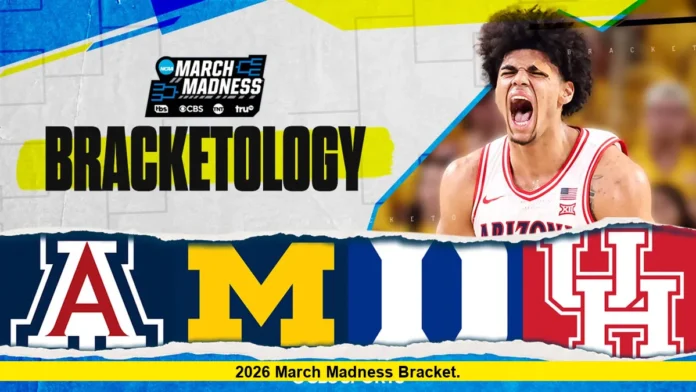

The 2026 March Madness bracket picture is rapidly taking shape as the NCAA men’s college basketball season heads into its final weeks, with top teams locking up tournament positions and key conference tournament games set to influence seeding on Selection Sunday. Fans across the U.S. are watching closely as powerhouse programs jockey for favorable placements and bubble teams fight for at-large bids.
With Selection Sunday scheduled for March 15, the landscape of the 68-team tournament field is clearer than ever. Teams at the top of the standings are gaining recognition, bracket projections are sharpening, and veteran squads and rising contenders alike are gearing up for March Madness glory.
Below, we break down the current bracket situation, highlight major storylines, and outline what to watch in the final push toward college basketball’s biggest event of the year.
Get the latest scoop on every contender and bubble team as the race heats up!
Follow the latest March Madness bracket projections and see which teams could claim top seeds and first-round matchups.
Elite Programs Leading the Bracket Projections
As of late February, recent projections place several programs firmly atop the projected tournament field. Among the favorites to secure the coveted No. 1 seeds are Duke, Arizona, Michigan, and UConn, all of which have strong resumes heading into March. Duke, in particular, has surged after claiming a road win over previously top-ranked Michigan, helping boost their AP national ranking and bracket status.
Earlier bracket projections showed Duke as the No. 1 overall seed, with Arizona, Michigan, and UConn rounding out the top four seed lines — setting up what could be one of the most intriguing March Madness tournaments in recent memory. These teams have balanced offensive firepower with defensive grit, and their consistent performance against strong competition has helped them maintain elite seed positions. All four squads have power conference success and multiple victories over ranked opponents, boosting their NET rankings and strengthening their bids for high seeds.
Conference Tournaments Starting and Seeding Stakes
Across the country, the conference tournament season is underway. These tournaments will play a major role in determining automatic bids and shaping the 2026 March Madness bracket. Every league from the MAAC to the SWAC is hosting its own postseason competition, with higher seeds earning byes and coveted placement advantages.
In the Southwestern Athletic Conference (SWAC), the tournament is hosted in College Park, Georgia, with all 12 teams vying for the automatic bid that comes with winning the conference title. Meanwhile, the MAAC tournament in Atlantic City, New Jersey pits the top 10 teams against one another from March 5–10, with the top six earning quarterfinal byes.
The Southern Conference, hosted in Asheville, North Carolina from March 6 to March 9, is another event where positioning can greatly impact which teams punch their ticket to the Big Dance and how favorable their path may be once there.
These conference tournaments not only determine automatic entries, but also influence seeding lines in the full 68-team bracket — from the First Four games on March 17–18 through to the Sweet 16 and beyond.
Bubble Teams and At-Large Bids
On the bubble, several programs are playing pivotal late-season games that could make or break their March Madness hopes. Texas Christian University (TCU) remains on the fringe of the tournament picture, taking key wins in the Big 12 but still needing strong conference tournament play to solidify its position.
The University of California’s men’s squad recently experienced a setback with a home loss that complicated its NCAA Tournament résumé. Their overall record and Quad 3 win–loss breakdown now forces them to fight for every inch of seeding improvement, especially in the loaded Atlantic Coast Conference.
Other mid-tier hopefuls, such as teams on the cusp in the Big Ten and Big 12, will be looking to conference play in the coming weeks to augment their NCAA Tournament profiles. A win in a marquee matchup or deep run in a league tournament can be the difference between a favorable seed and needing to sweat Selection Sunday.
Midwest, South, East, and West Region Predictions
Projection models — including those from experienced bracketologists — currently suggest a dynamic mix of power conference heavyweights and surprise contenders across the four regional divisions of the 2026 tournament. Here’s a snapshot of what the region lines could look like:
East Region: Duke as a dominant No. 1 seed sets the tone, with mid-range seeds filled by Big East and ACC contenders seeking marquee wins.
South Region: UConn and other high-ranking squads battle in a congested group of SEC and ACC teams for top slots, with bracket balance critical for bracket strategy.
West Region: Arizona is projected as a key No. 1 seed, anchored by strong regular-season wins and an elite Big 12 schedule slate.
Midwest Region: Michigan and other Big Ten programs are in contention, from top seeds to competitive middle seeds, backed by solid conference performances.
Teams such as Alabama, Villanova, and Wisconsin are projected as mid-tier seeds, with potential to upset top lines on Selection Sunday if they sustain momentum.
Top 25 Rankings and Momentum Shifts
Rankings matter as March approaches, and several teams have experienced notable moves that shape bracket forecasts. Duke has reclaimed the No. 1 spot in the AP Top 25 poll for the record 148th time, reaffirming their strength in the national landscape. Other teams like Gonzaga have climbed into the Top 10, underscoring the breadth of strong programs vying for favorable placements.
Florida and Alabama also made significant jumps in the latest polls, which can influence how the selection committee views their strength of schedule and tournament viability. Conversely, teams like Kansas and Vanderbilt endured declines after tough losses — affecting their bubble status and seeding expectations.
Key Matchups to Watch Before the Bracket Drops
The final regular-season games will have direct implications for placement in the 2026 March Madness bracket. One marquee contest saw Kansas take on Arizona, a game that could impact Big 12 standings and conference tournament seedings. Similarly, a Big Ten matchup between Michigan State and Indiana could influence how the committee evaluates mid-tier teams when assigning seeds.
These late-season showdowns promise intense competition and carry significant stakes — whether it’s a marquee victory for a top seed contender or a resume-boosting win for a bubble team hoping to secure an at-large bid.
Official Tournament Schedule
The official March Madness schedule reveals the timeline and locations for the 2026 NCAA Tournament. After Selection Sunday on March 15, the First Four plays on March 17–18, followed by the first and second rounds on March 19–22. The Sweet 16 and Elite Eight then span March 26–29, setting the stage for the Final Four on April 4 at Lucas Oil Stadium in Indianapolis, with the NCAA Championship game on April 6.
This structure gives fans a comprehensive view of where teams must win to advance, and how each part of the bracket is interconnected — from early upsets to the ultimate crowning of a national champion.
What do you think the final 2026 March Madness bracket will look like? Share your predictions and stay tuned as teams battle for seeding and a shot at glory!