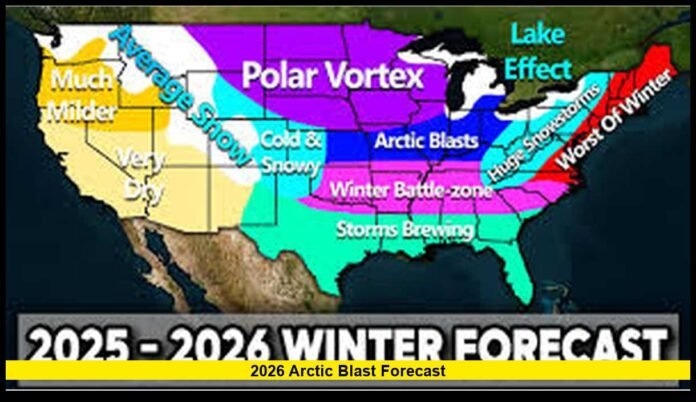

The 2026 arctic blast forecast confirms that a powerful and persistent Arctic cold pattern will influence large portions of the United States as winter advances into the new year. Atmospheric conditions already in place support repeated southward surges of polar air, producing extended periods of below-normal temperatures, heightened winter hazards, and widespread impacts on daily life across the country.
This winter pattern is not defined by a single cold snap. Instead, it reflects a broader and more enduring circulation setup that allows Arctic air to move south in waves. These waves reinforce one another, limiting warm-ups and creating long stretches of cold that affect everything from transportation and energy use to public safety and household routines.
The Foundation of the Current Winter Pattern
The structure of the 2026 arctic blast forecast rests on an established atmospheric alignment that has developed over weeks, not days. High-pressure systems forming over northern latitudes repeatedly funnel cold air into the central and eastern United States. Once in place, this cold air lingers due to limited disruption from warmer systems.
Upper-level winds have taken on a configuration that favors deep southward dips. These dips act as channels, guiding Arctic air directly into populated regions. As each cold surge moves through, it reinforces cold already on the ground, preventing temperatures from rebounding to seasonal norms.
This setup explains why cold conditions are expected to persist rather than fade quickly. It also clarifies why multiple regions experience similar cold impacts over extended periods.
Why Arctic Air Reaches the Lower 48 So Effectively
Arctic air moves south most efficiently when atmospheric barriers weaken. This winter, those barriers have relaxed enough to allow cold air to flow freely into the United States.
The jet stream plays a critical role. When it slows and bends, it creates openings for cold air to descend. This pattern has remained stable, allowing repeated intrusions without strong opposition from warm air masses.
Once Arctic air settles into central regions, surface conditions amplify its effects. Snow cover reflects sunlight, reducing daytime warming. Long winter nights allow temperatures to drop rapidly. These factors work together to keep cold entrenched.
Timing and Persistence of Cold Waves
The 2026 arctic blast forecast identifies multiple stages of cold, each building on the last. Initial outbreaks establish cold ground conditions. Subsequent waves deepen and extend that cold.
Late December marks the beginning of a major cold phase. Temperatures fall sharply across the northern Plains and Midwest before spreading east. Instead of retreating, the cold remains due to reinforcing Arctic pressure systems.
As January progresses, additional cold surges maintain the pattern. Even when brief moderation occurs, temperatures often remain below normal. This persistence distinguishes the current winter from seasons marked by short-lived cold snaps.
Midwest: The Core of the Cold
The Midwest lies at the heart of the 2026 arctic blast forecast. Its central location places it directly beneath the path of Arctic air masses moving south.
Temperatures frequently fall well below freezing, with overnight lows reaching dangerous levels. Daytime highs struggle to recover, often remaining far below typical winter averages.
Wind intensifies the impact. Open landscapes allow gusts to sweep across communities, driving wind chills lower. These conditions increase risks for outdoor workers, travelers, and anyone exposed without proper protection.
Snow cover further locks in the cold, creating a cycle where cold supports snow retention, and snow reinforces cold.
Great Lakes Region: Cold Amplified by Water
The Great Lakes region experiences a unique combination of Arctic air and moisture. As cold air crosses the lakes, it picks up moisture and releases it as heavy snow downwind.
The 2026 arctic blast forecast indicates frequent opportunities for lake-effect snow. These events can produce intense snowfall over narrow corridors, sharply reducing visibility and road safety.
Cold temperatures prevent melting between events. Ice accumulates on roads, rooftops, and infrastructure. Communities often face repeated snow removal challenges as winter progresses.
Northeast: Sustained Cold and Urban Impact
In the Northeast, Arctic air arrives fully developed. By the time it reaches this region, it has already crossed much of the continent, carrying deep cold.
Cities experience cold trapped between buildings, creating persistent chill. Rural areas feel unfiltered exposure to wind and cold. Heating demand rises sharply across both environments.
Snowfall varies by location, but cold remains constant. Even coastal areas experience extended periods of low temperatures when Arctic air dominates.
Southern States: Sudden and Disruptive Cold
The 2026 arctic blast forecast confirms that Arctic air penetrates far into the South during stronger outbreaks. These events can bring freezing temperatures to areas unaccustomed to prolonged cold.
Agriculture faces heightened risk as crops, livestock, and infrastructure encounter temperatures below typical thresholds. Homes and roads designed for milder winters face added strain.
Because cold arrives suddenly, preparation becomes critical. Freeze conditions may occur overnight, catching communities off guard.
Western United States: Variable but Vulnerable
The western United States experiences more varied impacts. Mountain ranges sometimes block Arctic air, but when pathways open, temperature drops can be dramatic.
Interior basins and plains are most susceptible. Cold settles into valleys, lingering for days due to limited air movement.
Even regions less accustomed to Arctic outbreaks can experience infrastructure stress when temperatures fall quickly and remain low.
Alaska: Deep and Enduring Cold
Alaska remains firmly under Arctic influence throughout winter. The 2026 arctic blast forecast shows prolonged periods of extreme cold, especially in interior regions.
Limited daylight intensifies cold effects. Infrastructure and transportation systems operate under constant strain. Residents rely heavily on preparedness and experience to navigate the season.
Energy Systems Under Pressure
Cold weather drives heating demand higher. During prolonged cold, energy systems operate near peak capacity for extended periods.
Natural gas consumption rises sharply. Electricity use increases as heating systems run continuously. Any disruption can have immediate consequences during severe cold.
Cold also affects infrastructure physically. Materials contract, mechanical systems stiffen, and maintenance becomes more difficult.
Transportation Challenges Multiply
Arctic cold affects all transportation modes. Roads freeze quickly, even without snow. Ice persists longer due to limited daytime melting.
Air travel faces delays as de-icing procedures become necessary. Rail systems encounter challenges as steel contracts and switches freeze.
The 2026 arctic blast forecast highlights the need for flexibility and caution when traveling during extended cold periods.
Public Health Risks Increase
Extreme cold poses serious health risks. Frostbite can occur rapidly. Hypothermia becomes a concern when exposure is prolonged.
Heating safety also becomes critical. Improper heating methods increase fire and carbon monoxide risks. Communities emphasize safe practices during extended cold spells.
Vulnerable populations face the greatest danger. Outreach and preparedness efforts become essential during sustained cold periods.
Daily Life in Prolonged Cold
Cold reshapes daily routines. Outdoor activities become limited. Work schedules adjust. School operations may change during severe conditions.
Household expenses rise as heating costs increase. Maintenance demands grow as cold stresses plumbing, vehicles, and appliances.
The 2026 arctic blast forecast underscores how weather patterns influence not just climate statistics, but everyday life.
Why This Winter Pattern Matters
This winter stands out due to its persistence. The 2026 arctic blast forecast confirms a pattern that affects weeks, not days.
Communities that understand the pattern can plan effectively. Preparation reduces risk, minimizes disruption, and improves safety outcomes.
Recognizing the scale and duration of cold allows individuals and institutions to respond proactively rather than reactively.
Looking Ahead Through the Rest of Winter
As winter continues, attention remains on atmospheric alignment. Continued reinforcement from the north sustains cold conditions.
Short-term fluctuations may occur, but the broader pattern favors repeated cold intrusions. Monitoring changes helps anticipate impacts before they arrive.
The 2026 arctic blast forecast remains a defining element of the season.
Winter continues to unfold across the nation, and the 2026 arctic blast forecast shows that cold will remain a central force—share how these conditions are affecting your area and stay connected for ongoing winter updates.