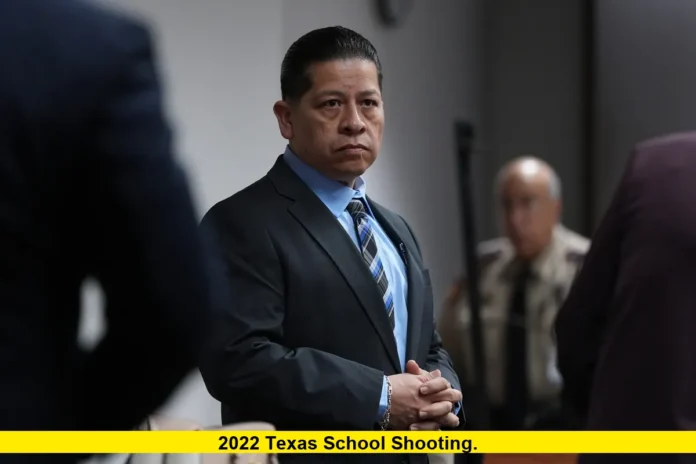

In a verdict that has captured national attention, a Texas jury has acquitted former Uvalde school police officer Adrian Gonzales of all charges tied to his conduct during one of the deadliest school shootings in United States history. The decision marks a pivotal moment in the legal aftermath of the 2022 Texas school shooting, in which an attacker murdered 19 children and two teachers at Robb Elementary School in Uvalde, Texas. The case was the first criminal prosecution directly linked to law enforcement’s response that tragic day, and its outcome stands to influence public debates around police accountability and crisis response for years to come.
The jury’s decision came after more than seven hours of deliberation in a Corpus Christi courtroom, where prosecutors had accused Gonzales of child endangerment related to his actions on May 24, 2022. The charges stemmed from allegations that Gonzales, one of the first officers to respond to the attack, failed to act swiftly enough to confront the gunman, thereby endangering students and staff. After careful review of the evidence, however, the jury concluded that the state had not met the burden necessary to convict him on any of the 29 felony counts.
This article breaks down the full context of the verdict, the key developments in the trial, the reactions from families and officials, and the broader implications for law enforcement and public safety policy.
The Uvalde Tragedy: A Nation Grieves
The 2022 Texas school shooting unfolded on May 24, 2022, when an 18-year-old gunman entered Robb Elementary School in Uvalde, Texas. The shooter took the lives of 19 fourth-grade students and two teachers. Before he was stopped, the attack lasted more than an hour, during which precious time passed before law enforcement officers breached the classroom where the victims lay. The massacre was quickly recognized as one of the most devastating school shootings in American history.
In the immediate aftermath, criticism mounted over the law enforcement response. Investigations revealed that nearly 400 officers from local, state, and federal agencies were on the scene but did not immediately confront the shooter inside the school. Those delays sparked anger and grief among families, educators, and the public, many of whom questioned why officers did not take quicker action to halt the violence.
Charges Against Adrian Gonzales: What He Faced
Former Uvalde Consolidated Independent School District Police Officer Adrian Gonzales was charged with 29 felony counts of child endangerment, one for each child killed or wounded during the shooting. Prosecutors alleged that Gonzales failed to act decisively when the situation demanded immediate intervention, and they argued that his hesitation contributed to the prolonged timeframe in which the attacker continued to kill.
The charges carried potential sentences of up to two years in state jail for each count, meaning a conviction could have resulted in significant prison time. Beyond the legal stakes, the trial carried immense emotional weight for the families of the victims, many of whom sought accountability from those entrusted with protecting children in moments of extreme danger.
Defense’s Argument: Chaos and Confusion
At the heart of the defense’s argument was the claim that Gonzales was unfairly singled out for the failure of a broader law enforcement system. His attorneys maintained that Gonzales acted reasonably given the confusing and chaotic circumstances he encountered upon arriving at the school. They argued that he never saw the gunman before the attacker entered the building, and that other officers who arrived subsequently also did not immediately engage the shooter.
The defense portrayed Gonzales as a trained officer doing his best amid unprecedented chaos and contended that holding him criminally liable would set an unfair precedent.
Jury Deliberation and Verdict
After hearing days of testimony, emotional statements from survivors and families, and extensive evidence about the actions taken by officers on the ground during the shooting, the jury retired to deliberate. After more than seven hours, they returned with a unanimous decision: not guilty on all 29 counts.
The verdict meant that the jury found reasonable doubt regarding Gonzales’s criminal liability. The decision highlighted how jurors interpreted the evidence and testimony in light of legal standards governing criminal responsibility, particularly in high-stress emergency situations.
Reactions from Families and the Public
Outside the courthouse, reactions were deeply divided. Many families of the victims expressed profound disappointment and frustration at the verdict. For them, the decision represented another painful reminder of the loss they endured. Some family members spoke emotionally about their sense of injustice and the hard conversations ahead as they continue to grieve.
Others, including supporters of Gonzales, voiced relief. For Gonzales himself, the moment brought tears and gratitude toward his legal team and the jury for reaching a verdict that acknowledged what they believed to be reasonable conduct under extreme conditions.
Law Enforcement Accountability: Legal and Policy Questions
The trial of Adrian Gonzales was notable not only for its emotional impact but also for its legal significance. It was one of the rare instances in which a law enforcement officer faced criminal prosecution for alleged inaction during a mass shooting. Prior cases, such as the prosecution of an officer in Parkland, Florida, also resulted in acquittals, underscoring the difficulty of securing criminal convictions in such circumstances.
The acquittal raises critical questions about how the legal system evaluates the split-second decisions of officers in high-pressure environments. It also fuels ongoing debates about how best to ensure accountability while recognizing the complex challenges faced by first responders.
What Comes Next: Pending Trials and Broader Oversight
Adrian Gonzales was not the only officer charged in connection with the law enforcement response to the Uvalde shooting. Another officer, former Uvalde school police chief Pete Arredondo, faces similar charges, and his trial has yet to be scheduled. The outcome of that case could further shape discussions about accountability and the responsibilities of command-level officers in crisis situations.
Separately, numerous investigations and reports have examined systemic failures in the law enforcement response. These analyses have prompted calls for reforms in training, command structure, communication protocols, and active-shooter response strategies across police departments nationwide.
Reflection: Beyond the Courtroom
The acquittal of a former officer in the 2022 Texas school shooting case does not mark the end of the broader conversation about safety in schools, crisis response, and the expectations placed on law enforcement. The tragedy itself, the legal proceedings that followed, and the reactions they sparked reflect a nation still grappling with how to balance accountability, justice, and practical realities in moments of extreme peril.
As communities continue to mourn lost loved ones and grapple with the implications of the verdict, the urgent questions around school safety, policing standards, and legislative action remain at the forefront of national discourse.
We want to hear from you — share your thoughts or stay tuned for continued coverage and updates.