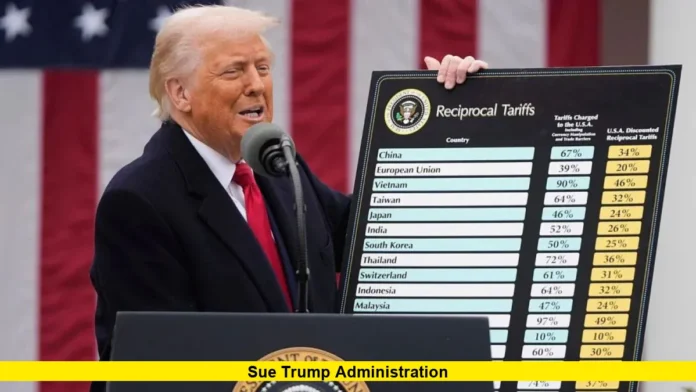

A coalition of more than 20 U.S. states has filed a lawsuit challenging a new 15% global tariff proposed by the administration of Donald Trump. The legal action marks the latest escalation in a major dispute over U.S. trade policy, with state leaders arguing that the sweeping tariffs exceed presidential authority and could harm American consumers and businesses.
The lawsuit, filed on March 5, 2026, in the U.S. Court of International Trade, brings together roughly two dozen states led by Democratic attorneys general and governors. The states are asking the court to block the tariffs before they take effect, claiming the administration’s actions violate federal law and the constitutional limits on executive power.
Background: The 15% Global Tariff Plan
The dispute stems from a plan by the Trump administration to impose a 15% tariff on a broad range of imported goods from many countries around the world. The administration argues that the policy is necessary to reduce the U.S. trade deficit and protect domestic industries from foreign competition.
Officials say the tariff authority comes from Section 122 of the Trade Act of 1974, a law that allows the president to impose temporary import restrictions when the United States faces serious balance-of-payments problems. Administration representatives have indicated the tariffs could initially start at 10% before rising to the maximum 15% allowed under the statute.
However, critics say the move represents an unprecedented use of the law and bypasses Congress, which traditionally holds the constitutional power to set tariffs and regulate international trade.
Lawsuit Follows Supreme Court Setback
The new tariffs were announced shortly after the U.S. Supreme Court dealt a significant blow to the administration’s earlier tariff strategy. In February 2026, the Court ruled that the president had improperly used emergency powers to impose broad import duties on global goods.
Following that decision, the administration turned to a different legal authority—Section 122—to reintroduce a similar tariff policy. State officials argue that this maneuver attempts to sidestep the Court’s ruling and still achieve the same economic outcome.
According to the states’ lawsuit, the new tariffs are effectively a “workaround” that stretches the limits of the law and undermines Congress’s role in shaping trade policy.
States Involved in the Legal Challenge
The legal challenge includes a coalition of states from across the country. Among them are:
- California
- Washington
- Illinois
- Massachusetts
- New Jersey
- Pennsylvania
- Minnesota
- Virginia
- Maryland
- Colorado
- Michigan
- Wisconsin
- Nevada
- Rhode Island
- Vermont
- Connecticut
- Delaware
- New Mexico
- Maine
- North Carolina
- Kentucky
The coalition is led by several states including California, Oregon, New York, and Arizona. The lawsuit also involves a mix of attorneys general and governors who say the tariffs could damage state economies.
Why States Oppose the Tariffs
State officials argue that the tariffs will increase the cost of imported goods and place additional financial pressure on households and businesses. Because tariffs function as taxes on imports, economists say companies often pass those costs on to consumers through higher prices.
The states claim the policy could raise the cost of everyday goods, disrupt supply chains, and hurt industries that rely heavily on international trade. Some estimates cited by critics suggest the tariffs could cost the average American household about $1,200 per year if broadly applied to imports.
State leaders also say the tariffs may disproportionately affect manufacturers, farmers, and small businesses that depend on global supply networks.
What the States Are Asking the Court to Do
In their legal filing, the states are requesting several actions from the court:
- Block the tariffs from being implemented.
- Declare the administration’s use of Section 122 unlawful.
- Order refunds for any tariffs already collected under the policy.
The lawsuit will be heard by a three-judge panel at the U.S. Court of International Trade, a specialized federal court that handles disputes related to tariffs and international commerce.
White House Response
The Trump administration has defended the tariff plan, arguing it is a necessary step to protect American workers and industries. Officials say the tariffs are intended to address longstanding trade imbalances and strengthen domestic manufacturing.
A White House spokesperson stated that the administration will “vigorously defend the President’s action in court,” signaling a lengthy legal battle ahead.
Supporters of the tariffs also argue that aggressive trade policies can encourage companies to produce goods domestically rather than relying on imports.
Potential Economic and Political Impact
The case could have significant implications for U.S. trade policy and the scope of presidential authority over tariffs. If the court blocks the tariffs, it would represent another legal setback for the administration’s economic agenda. On the other hand, if the tariffs are allowed to proceed, they could reshape global trade relations and potentially trigger retaliation from other countries.
The dispute also highlights the broader political divide over trade policy in the United States. While some leaders advocate for stronger protections for domestic industries, others warn that tariffs can spark trade conflicts and increase costs for American consumers.
What Happens Next
The court is expected to review the lawsuit in the coming months, though it could face requests for an expedited ruling given the economic stakes involved. Until then, the legal fight between the states and the federal government will likely remain a central issue in the national debate over tariffs, trade, and presidential power.
For businesses, consumers, and international trading partners, the outcome of the case may determine whether the proposed 15% global tariff becomes a major shift in U.S. economic policy or another policy blocked in court.