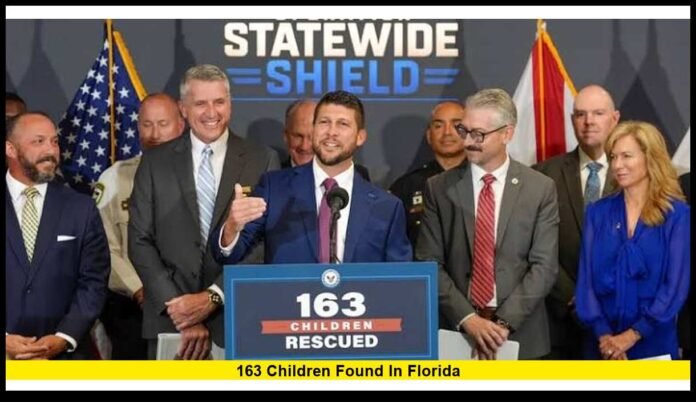

The latest update on 163 children found in florida centers on Operation Statewide Shield, a five-day effort that brought together law enforcement agencies and child-focused organizations to locate and safely recover missing children.
Florida officials announced the results on August 25, 2026, confirming that 163 children had been recovered. The children ranged in age from 2 months to 17 years old. The operation reached communities throughout Florida and also involved recoveries connected to six other states, one U.S. territory and 12 countries.
The recovery effort has become one of the largest child-recovery operations ever conducted in Florida. Officials described it as the state’s first state-led statewide child-recovery initiative.
What Happened During Operation Statewide Shield
Operation Statewide Shield was conducted from August 17 through August 21, 2026.
The initiative focused on identifying, locating and recovering missing children under the age of 18. Investigators used real-time intelligence, existing case information and field operations to locate vulnerable children.
Rather than operating in a single community, teams worked across several major Florida regions.
The operation also extended beyond Florida when investigators determined that missing children connected to cases were located elsewhere.
The effort involved state, local and federal law enforcement agencies. Child welfare professionals, medical providers, victim advocates and social-service organizations also supported the recovery process.
This broad approach allowed investigators to address individual missing-child cases while providing immediate assistance once children were located.
How Many Children Were Recovered?
Authorities confirmed that 163 children were recovered during the operation.
The recoveries were spread across seven Florida regions:
| Region | Children recovered |
|---|---|
| Tampa Bay | 46 |
| Miami | 41 |
| Jacksonville | 32 |
| Orlando | 21 |
| Fort Myers | 12 |
| Pensacola | 8 |
| Tallahassee | 3 |
| Total | 163 |
Tampa Bay recorded the largest number of recoveries with 46 children.
Miami followed with 41, while Jacksonville accounted for 32. Orlando had 21 recoveries, followed by Fort Myers with 12.
Pensacola recorded eight recoveries, while three children were recovered in the Tallahassee region.
These numbers show that the operation involved multiple areas rather than a single concentrated location.
The 163 children were not all found together. The figure represents recoveries connected to numerous individual investigations carried out through the statewide initiative.
Children Were Found Beyond Florida
One of the most significant aspects of the operation was its reach outside the state.
Authorities said investigators located children in six other states, one U.S. territory and 12 countries.
The U.S. locations identified in the official announcement included Alabama, California, Ohio, New York, North Carolina, Tennessee and Puerto Rico.
International recoveries involved Brazil, Canada, Colombia, Dominica, Finland, Ghana, Guatemala, Italy, Jamaica, Mexico, Spain and Taiwan.
The international component highlights the challenges investigators face when missing-child cases cross state or national borders.
A child reported missing in one jurisdiction may eventually be located somewhere far from the original community. Cooperation between agencies becomes essential in those situations.
Operation Statewide Shield created a coordinated framework for those investigations.
The Ages of the Recovered Children
The recovered children ranged from just 2 months old to 17 years old.
That age range means investigators were dealing with very different circumstances and needs.
An infant requires immediate attention from caregivers and medical professionals. Older teenagers may require different forms of social, emotional and legal support.
Officials said many of the recovered children had experienced abuse, neglect, exploitation or exposure to other criminal activity.
Some cases also involved human trafficking.
However, the public information released by authorities does not say that every one of the 163 children was a trafficking victim.
That distinction is important because the children were connected to different cases and circumstances.
The operation addressed missing and endangered youth broadly. Individual cases may involve very different reasons for a child being reported missing.
Why the Recovery Number Has Drawn Attention
Recovering 163 children in one coordinated operation represents a major law enforcement effort.
Florida officials called the initiative the first state-led statewide child-recovery operation and the largest operation of its kind in Florida history.
The scale also required coordination between agencies that normally operate within separate jurisdictions.
Investigators had to exchange information, identify leads, determine locations and coordinate safe recoveries.
The work did not stop when a child was located.
Authorities also had to determine what support each child required after recovery.
That meant bringing together law enforcement officers, child welfare workers, medical professionals and victim advocates.
The operation therefore had two major components: locating children and helping them transition into safer circumstances.
What Happened After Children Were Located
Recovered children who needed assistance were taken to designated recovery hubs.
These locations provided access to several child-focused services.
Support included medical care, social services, child welfare assistance and victim advocacy.
Some recovery hubs also provided basic necessities and a calm environment for children who had experienced difficult circumstances.
The approach was designed to avoid treating the recovery as simply the end of a missing-person case.
For some children, being located was only the beginning of a longer process.
They could require medical evaluations, emotional support, safe housing arrangements, family assessments or additional child welfare services.
The Florida Department of Children and Families and the Florida Department of Juvenile Justice handled custody transfers involving recovered children.
This helped move the cases from the immediate recovery stage into the appropriate child welfare or juvenile justice process.
Medical and Behavioral Support Was Part of the Response
The recovery effort also relied on organizations with experience working with vulnerable children.
BayCare supported the operation in the Tampa Bay area through a recovery hub.
Children recovered in Hillsborough, Pasco, Pinellas and Polk counties were brought to the hub for medical screenings, behavioral health support and access to social services.
The recovery environment also included basic personal-care items, clothing, food and other necessities.
Professionals worked to provide children with a setting that was calm and supportive after their recovery.
This approach reflected the broader goal of the operation.
Locating a missing child is critical, but children who have experienced abuse, neglect or exploitation can need continuing assistance.
What Officials Said About the Children’s Circumstances
Officials said many recovered children had experienced different levels of abuse, neglect and exploitation.
Some were also exposed to other criminal activity.
Human trafficking was identified as one of the criminal concerns connected to cases handled during the operation.
Authorities have not released detailed circumstances for every child.
That means it is not possible to accurately describe the personal experience of each of the 163 children from the publicly released information.
The official figures confirm the number recovered, their age range and the broad categories of concerns involved.
Additional details remain limited because these cases involve minors and several investigations are still active.
Three Felony Cases Were Generated
The operation also produced criminal investigations.
Authorities announced multiple arrests connected to cases uncovered or advanced during the statewide effort.
Three felony cases were identified as being pursued by prosecutors.
The reported allegations included lewd and lascivious acts involving minors, lewd or lascivious battery, interference with child custody and resisting an officer without violence.
Officials also said more arrests could follow as investigations continue.
Criminal allegations should not be confused with convictions.
Anyone accused of a crime is entitled to due process, and charges must proceed through the court system.
Because the operation involved numerous investigations, additional criminal cases could develop independently of the initial announcement.
Why Individual Names Have Not Been Widely Released
The children involved are minors, and authorities have limited the amount of identifying information released publicly.
That is especially important in cases involving abuse, exploitation or trafficking.
Publishing a child’s name, photograph or personal circumstances without proper authorization could expose the child to additional harm.
Authorities have instead provided broad statistics and regional totals.
This allows the public to understand the scale of the operation without unnecessarily identifying vulnerable children.
Readers should also be cautious about social media posts claiming to identify individual children connected to the operation.
Unless information comes from an authorized law enforcement agency or another verified source, such claims should not be treated as confirmed.
Five Days of Coordinated Investigative Work
The operation lasted five days, but the preparation behind it involved much more than five days of work.
Investigators had to review cases, examine available intelligence, coordinate participating agencies and establish procedures for safely recovering children.
Teams then conducted field operations in several Florida regions.
The operation included activity in Pensacola, Tallahassee, Jacksonville, Orlando, Tampa, Fort Myers and Miami.
Those locations represented separate operational areas, each requiring coordination among local agencies and the broader statewide task force.
The statewide model allowed investigators to combine resources instead of handling every case in isolation.
Agencies Worked Together Across Jurisdictions
The Florida Department of Law Enforcement led the operation.
The effort also included the Florida Attorney General’s Office, the Office of Statewide Prosecution, the Department of Children and Families and the Department of Juvenile Justice.
Thirteen sheriff’s offices provided assistance.
Participating agencies included sheriff’s offices serving Manatee, Sarasota, Jacksonville, Clay, Nassau, Putnam, St. Johns, Flagler, Orange, Escambia, Hillsborough, Pasco and Pinellas counties.
Numerous municipal law enforcement agencies and federal partners also participated.
Organizations providing child-focused services included BayCare, More to Life and the Florida Human Trafficking Victims Fund.
The range of participants was important because missing-child cases often involve multiple jurisdictions.
How the Missing Cases Were Documented
Authorities documented recovery information through Florida’s Missing Endangered Persons Information Clearinghouse.
The system helped agencies update information and ensure that recovered cases were properly closed.
Accurate case documentation is important after a missing child is located.
Law enforcement needs to record the recovery while child welfare officials determine what happens next.
The process also helps prevent confusion when multiple agencies have information connected to the same child.
For a statewide operation involving 163 recoveries, maintaining accurate records was particularly important.
Five Children Were Recovered in West Palm Beach Cases
The West Palm Beach Police Department separately confirmed that five children who had previously been reported missing to that department were located during Operation Statewide Shield.
Those children were safely recovered as part of the broader statewide initiative.
The local department’s participation illustrates how the statewide operation connected local missing-person cases with the larger investigative effort.
Authorities have not publicly released the personal details of those children.
The same privacy considerations apply to the other minors recovered during the operation.
The Operation Was Not About One Single Location
One point that remains important when discussing the 163 recoveries is that the children were not discovered in one place.
The operation involved multiple cities and regions across Florida.
Investigators also located children in other states, a U.S. territory and countries outside the United States.
This means descriptions of the operation as a single rescue site can be misleading.
Instead, the 163 recoveries represent the combined results of numerous investigations conducted under one coordinated initiative.
The statewide approach allowed agencies to work toward the same goal while handling individual cases separately.
What Happens to the Cases Now?
The five-day operation has ended, but the investigations have not necessarily ended.
Authorities have confirmed that multiple law enforcement investigations connected to the operation remain ongoing.
Prosecutors are also handling felony cases generated during the initiative.
That means future developments could involve additional arrests, criminal charges or court proceedings.
Officials have indicated that more arrests could occur as investigators continue examining evidence.
The children, meanwhile, remain the central focus of the recovery process.
For those who require continuing assistance, child welfare agencies and support organizations will continue working on their individual needs.
Latest Status as of August 31, 2026
As of August 31, the confirmed recovery figure remains 163 children.
The children ranged in age from 2 months to 17 years old.
The largest regional total was recorded in Tampa Bay with 46 recoveries. Miami had 41, Jacksonville had 32 and Orlando had 21.
Fort Myers accounted for 12, Pensacola had eight and Tallahassee had three.
The operation also resulted in recoveries connected to six other states, one U.S. territory and 12 countries.
Children who required assistance were taken to designated recovery hubs, where they could receive medical, social-service and child welfare support.
Three felony cases were identified for prosecution, while other investigations remain active.
There has been no confirmed change to the 163-child total announced by Florida officials.
What the 163 Recoveries Mean
The scale of the operation demonstrates the importance of cooperation when missing-child cases involve multiple jurisdictions.
Florida agencies were able to combine state resources with local departments, federal partners and organizations specializing in children’s services.
The recovery process also showed why locating a missing child is only one part of the response.
Children who have experienced abuse, neglect or exploitation can require continued care after they are found.
The recovery hubs provided a bridge between law enforcement and those longer-term services.
For the families and communities involved, the confirmed recovery of 163 children represents a significant development.
At the same time, many individual investigations remain active, meaning the full legal outcome of the operation will take additional time.
Final Update
The latest confirmed information shows that 163 children were recovered through Operation Statewide Shield after a coordinated five-day effort across Florida and beyond. The children represented a wide range of ages and circumstances, while authorities continue investigating cases involving abuse, exploitation and other criminal activity.
The statewide initiative has concluded, but the work surrounding the recovered children and the investigations connected to their cases continues.
Stay with the latest verified developments and share your thoughts in the comments as more confirmed information becomes available.